

Vastu Tips · 21 October 2026 · 7 min read
2026's Trending Home Colours and Where Vastu Places Them
Terracotta, sage, greige, mocha and brass are everywhere this year. Here is where each trending colour sits by Vastu direction, and how to enjoy one when the zone asks for something else.
By Dr. Kimaya Parikh-Ambekar, Vastu consultant, Andheri East, Mumbai
Read this in: हिन्दी
01
Which home colours are trending in 2026?
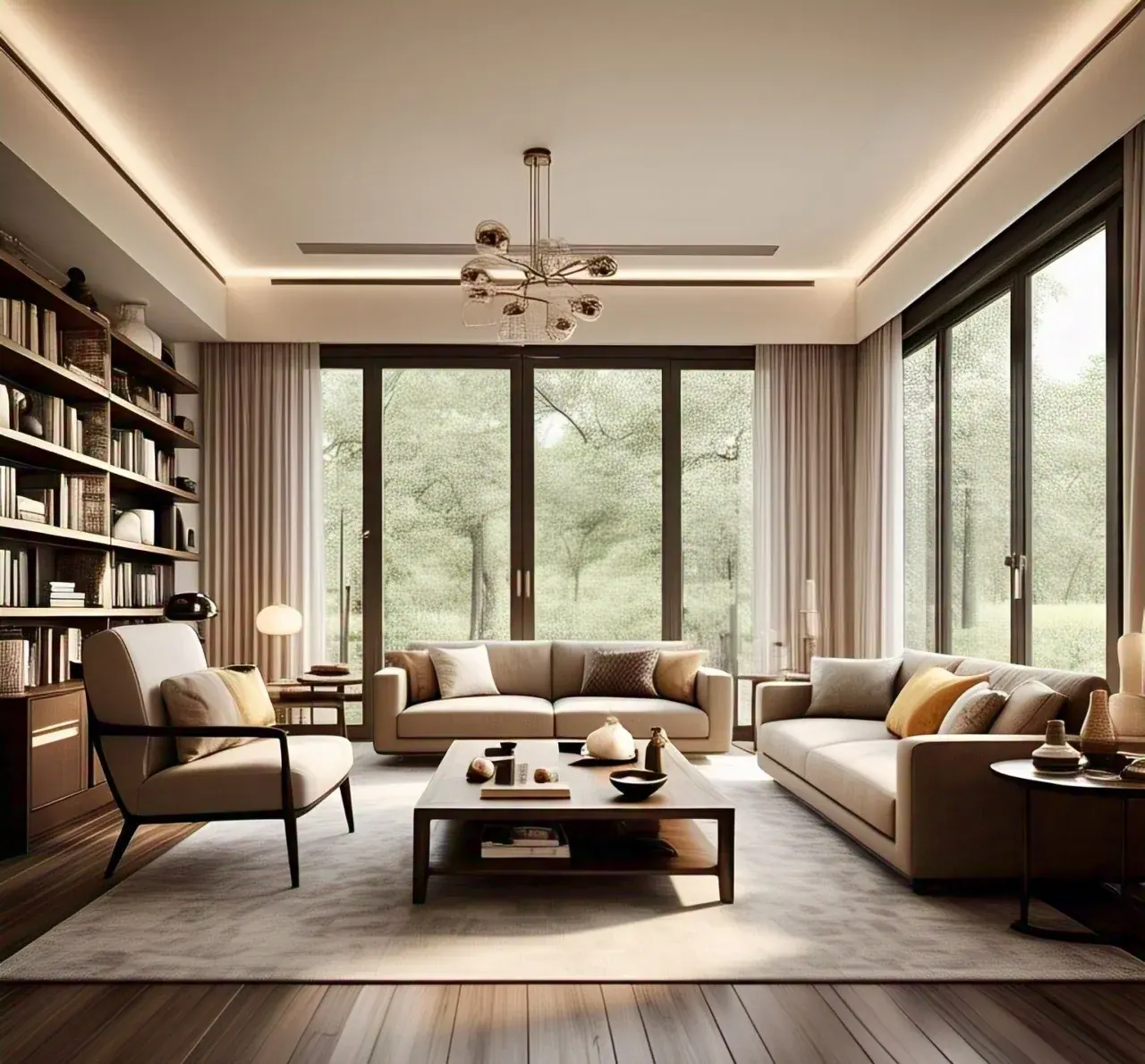
The colours trending in Indian homes in 2026 are warm and earthy: terracotta, sage, olive, warm whites with a yellow or pink undertone, greige, clay brown, muted mustard, dusty or sky blue, mocha, and brass accents. They feel calm, natural and lived-in rather than glossy.
Most of these shades already belong to one of the पंचतत्व (Pancha Tattva, the five elements), so a trend colour is rarely wrong in itself. The real question is which wall it goes on and how much of it you use.
02
How does Vastu decide which colour goes where?
Vastu decides where a colour goes by matching it to the element of the direction the room or wall sits in. Earth shades suit the South-West, fire shades the South-East, water shades the North, air shades the North-West and West, and very light shades the North-East and the centre.
First find each room's direction from the centre of your home, using a compass or our direction finder. Our colour therapy guide has the full direction chart, so this article focuses only on the new palette.
Classical texts speak of directions and elements, not paint swatches. Matching modern shades to elements is later practice, so treat these pairings as gentle guidance.
03
Where do terracotta, clay brown and mocha belong in Vastu?
Terracotta, clay brown and mocha belong mainly in the South-West and the South, the zones of earth and stability. Their weight and warmth match the grounded quality of the नैऋत्य (Nairutya, the South-West), which is why they suit a master bedroom, a study wall behind the desk or a heavy bookshelf.
01
Terracotta
Part earth, part fire. It suits the South and South-East, and the South-West when softened towards a dusty clay. Lovely as clay pots, floor tiles or one textured wall.
02
Clay brown
A pure earth shade. Ideal on a South-West bedroom wall, a wooden headboard or a jute rug.
03
Mocha
A deep coffee brown. Keep it to the South-West and South, and to furniture or a lower wall panel. Like all heavy browns, it is kept off large areas of the North-East and North.
04
Where should sage and olive green be used as per Vastu?
Sage and olive green should be used mainly in the East and the North, where green is linked with growth, freshness and new opportunity. Sage is soft enough for a full wall in an East-facing living room or a children's study. Olive is deeper, so it works better as a sofa, curtains or a single feature wall.
Green is also commonly used in the South-East, the same zone where the money plant is traditionally kept, as long as it sits alongside the warm peach, orange and pink of that fire zone. In the South-West, where earth tones lead, bring green in through plants and cushions instead of the walls.
05
Where do dusty blue and sky blue sit in a Vastu home?
Dusty blue and sky blue sit most comfortably in the North, the zone of water and Kubera, and in the East, where a soft sky tone echoes the morning. A pale blue also suits West and North-West rooms when it stays light and airy.
Blue is the colour of water, so Vastu keeps it small in the South-East, where water and fire would clash, and off large areas of a South-West bedroom. A dusty blue bedsheet is fine there; in the kitchen, a few blue backsplash tiles are plenty.
06
Can warm whites, greige and muted mustard be used anywhere?
Warm whites can be used almost anywhere, which makes them the safest base colour for any Vastu home. An off-white with a gentle yellow or pink undertone suits the North-East, the ब्रह्मस्थान (Brahmasthan, the centre), passages and ceilings, and it calms down stronger accent colours in every other zone.
01
Warm white
Any direction. Choose a yellow undertone for the North-East and East, and a slight pink undertone for the South and South-East.
02
Greige
A grey-beige blend that bridges air and earth. It suits the West and North-West, and leans towards the South-West when it is more beige than grey.
03
Muted mustard
An earth-yellow. It suits the South-West and South as a wall or armchair. In the North-East, keep only a pale yellow on the walls and let mustard appear in a cushion or a puja cloth.
07
Where should brass accents go as per Vastu?
Brass accents belong in the pooja corner, at the entrance and in the South-West, where the warm golden tone adds prosperity and steadiness. Think of a brass diya in the North-East mandir, an urli near the door or brass handles on a South-West wardrobe.
Many consultants also use metal finishes in the West and North-West. Keep brass polished and use it as an accent, not a whole wall of gold. Our brass and copper guide explains how metals work as remedies.
08
What if you love a trend colour but the zone wants something else?
If you love a trend colour but the zone wants something else, use it on one wall, in textiles or in décor, and keep the zone's own colour as the base. This keeps the room balanced while still letting you enjoy the shade.
Say your living room is in the North and you love terracotta. Keep the walls sage or warm white, and bring terracotta in through clay planters, a rug and cushions. See also our living room Vastu guide and bedroom colour guide.
01
One accent wall
Choose the wall that falls in the colour's own zone, for example the South-West wall for mocha or the East wall for sage.
02
Go lighter
Most trend shades come in a softer version. A pale terracotta or a misty olive sits more easily in a zone that is not its own.
03
Textiles first
Curtains, bedsheets and rugs are easy to change, which suits rented flats and lets you test a colour for a season.
04
Use the colour tool
Our free colour guide suggests shades by direction before you buy paint.
09
When to consult a Vastu expert
Consult a Vastu expert before repainting a whole home, when a designer's palette clashes with your room directions, or when a room still feels heavy after a colour change.
Dr. Kimaya Parikh-Ambekar of VastuKimaya, based in Andheri East, measures each room with a compass and prepares a colour therapy plan with a second option for any shade you dislike. Consultations are on-site across Mumbai or distant, using floor plans and photographs. You can book an appointment when you are ready.
Questions
Frequently asked
Which colour is lucky for home in 2026 as per Vastu?
No single colour is lucky for every home in 2026, because Vastu looks at where a colour goes. Terracotta and clay brown suit the South-West, sage green the East and North, sky blue the North, and warm whites almost any room.
Is terracotta colour good for home as per Vastu?
Yes, terracotta is a good Vastu colour when it is used in the South, South-East or South-West, where earth and fire are welcome. In the North-East and North, keep it to small touches such as clay pots or a cushion rather than whole walls.
Is sage green good for the bedroom as per Vastu?
Sage green is good for a bedroom in the East or North, and for a children's room. In a South-West master bedroom, earthy beige or clay usually suit the walls better, and sage can come in through bedsheets or plants.
Is grey colour good for home as per Vastu?
Soft grey and greige are fine in the West and North-West, which are linked with the air element. Dark grey over large areas can feel heavy, so it is usually kept to furniture or small accents and away from the North-East.
Which colour should be avoided in the North-East as per Vastu?
Dark, heavy colours are usually avoided on large areas of the North-East, including deep brown, mocha, dark grey, black and strong red. This zone stays light with white, cream or pale yellow.
Want this applied to your own home or office?
Book free first call