






Health & Wellbeing · 21 October 2026 · 7 min read
Mumbai's Winter Air: Vastu and Simple Habits for Cleaner Air at Home
Mumbai's air often turns hazy from November to February. Here is how Vastu's air zone, smarter window timing, wet mopping and a kitchen exhaust help keep the air at home fresher, with honest notes on plants and purifiers.
By Dr. Kimaya Parikh-Ambekar, Vastu consultant, Andheri East, MumbaiHer doctorate is in Computer Science; she is not a medical doctor.
Read this in: हिन्दी

01
Why does Mumbai's air get hazier in winter?
Mumbai's air often gets hazier from November to February because cooler, calmer weather lets dust and smoke linger close to the ground instead of being carried away by the sea breeze. Construction dust, traffic and festive smoke add to it, and many mornings look grey even without rain clouds.
Vastu cannot change the city's air, but it has always cared about what happens inside the walls. It treats air as one of the पंचतत्व (Pancha Tattva, the five elements) and fresh air as a carrier of प्राण (prana, life energy). The habits below bring that old idea together with simple, practical care.
A clear note first: these ideas complement, and do not replace, medical advice. If anyone at home has asthma, allergies or any breathing problem, please follow your doctor's guidance, and seek medical help promptly if breathlessness gets worse.
02
When should you open windows when outdoor air is poor?
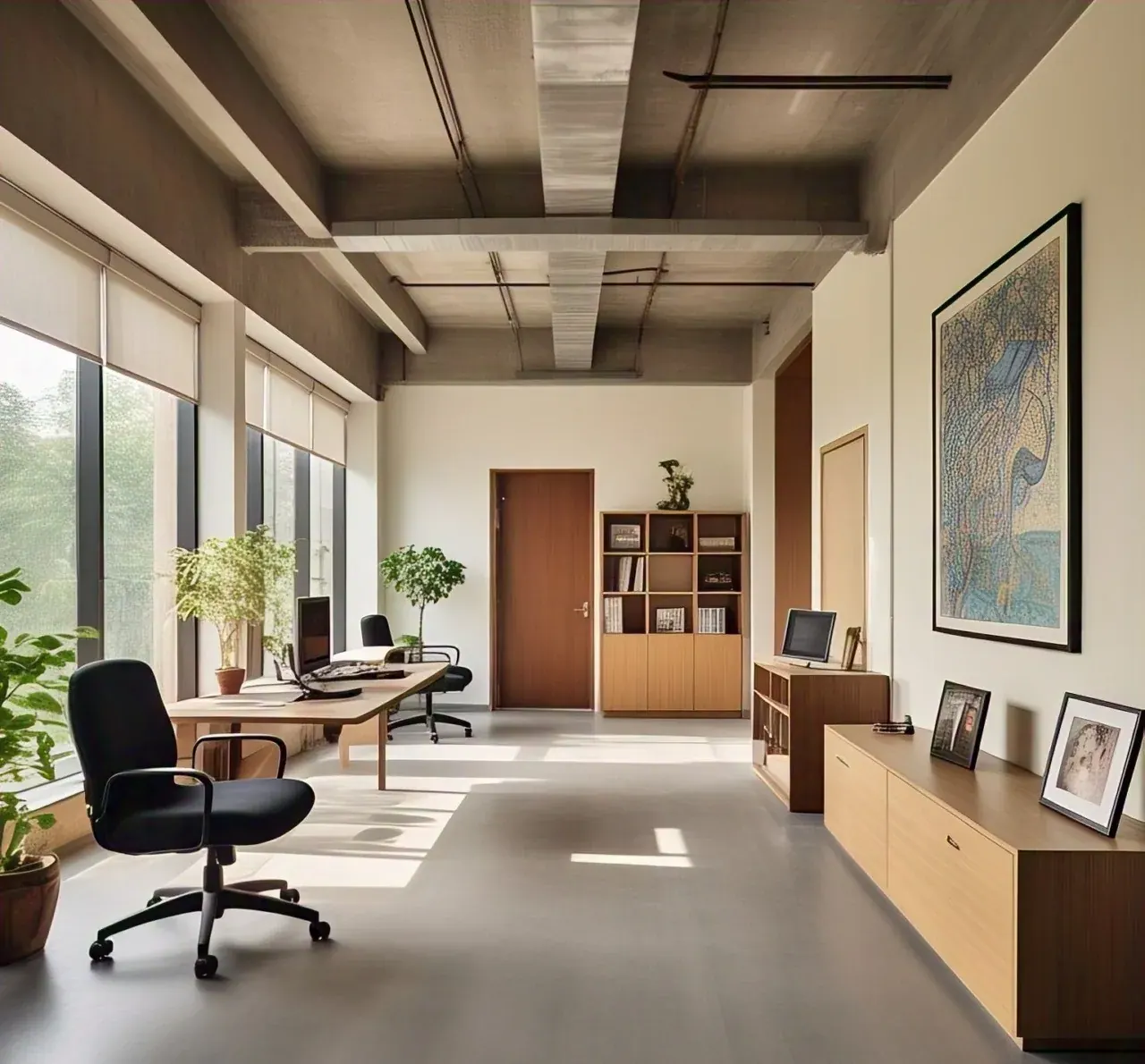
Open windows when the outdoor air is clearer, which in Mumbai winters is usually late morning to mid-afternoon, after the sun has lifted the early haze. Early mornings and late evenings tend to be the haziest times, so those are better for keeping windows mostly closed.
Check a government air-quality reading for your area on your phone, and air out the home in short, strong bursts rather than leaving windows half-open all day. Open windows on opposite or adjacent walls for ten to fifteen minutes so the air actually moves through. Our fresh air and light guide explains cross-ventilation in a flat in more detail.
03
Which direction is the air zone in Vastu?
The North-West is the air zone in Vastu, called वायव्य (Vayavya) after Vayu, the wind deity. Keeping this part of the home open, light and ventilated lets air move freely through the rest of the flat.
In winter, a North-West window is often one of the first to open on a clear afternoon. Keep it free of heavy cupboards, stacked boxes and drying laundry that blocks the breeze. Our article on Vayavya, the North-West air zone covers what else belongs here.
01
Clear the sill
A window crowded with pots and bottles opens less often. Keep it easy to open.
02
Wash the curtains
Curtains hold dust. Wash North-West and living room curtains at the start of winter and again mid-season.
03
Clean the mesh
Mosquito mesh and grilles trap grime. Wipe them with a damp cloth every week or two.
04
Do indoor plants really clean the air at home?
Indoor plants make a room feel fresher, but a few pots do not clean indoor air in any meaningful way on their own. Ventilation, cleaning and cutting down smoke indoors matter far more.
That does not make plants pointless. A healthy Tulsi in the North-East or East, or an areca palm in a bright corner, adds greenery and a calming routine of care. Keep the soil from staying soggy in winter, because damp soil can grow mould, and ask your doctor before adding many plants if anyone has allergies. Our indoor plants guide covers placement.
05
Is wet mopping better than sweeping for dust?
Yes, wet mopping is gentler on the air than dry sweeping, because a broom lifts fine dust back into the room while a damp mop holds it. Damp dusting of shelves, fans and window ledges works the same way.
Many Vastu households add a pinch of sea salt to the mopping water as a simple cleansing ritual. If you do, use a small amount and test it on your floor first, since salt can leave marks on some stone. Mop from the North-East towards the South-West and the entrance, keep a washable doormat outside the main door, and leave shoes on the rack rather than inside the rooms.
06
How does the kitchen affect air quality at home?
The kitchen is often the biggest source of indoor smoke, so a working exhaust fan or chimney makes a real difference. Vastu places the kitchen in the South-East, the zone of अग्नि (Agni, fire), and fire always needs a way for heat and smoke to leave.
01
Run the exhaust
Switch it on before you start cooking and leave it running for a while after the gas is off.
02
Clean the filters
Greasy filters pull very little air. Clean them as the manufacturer suggests, more often during festival cooking.
03
Tadka and frying
Keep a window open and the exhaust on high for tempering, deep-frying and roasting chillies.
04
Close the door
Where the layout allows, close the kitchen door while frying so smoke does not drift into bedrooms.
07
How much incense and dhoop should you burn in winter?
Burn incense, dhoop and camphor lightly in winter, such as one stick or a short camphor aarti with a window open, because any smoke adds to the haze already in the air. This keeps the ritual without filling the room.
A ghee diya with a trimmed cotton wick gives a steady flame with little smoke, and fresh flowers in the mandir bring fragrance with no smoke at all. If anyone at home has breathing trouble, ask the doctor whether smoke of any kind is suitable, and remember that strong essential oils can irritate sensitive airways too. Never leave a flame unattended.
08
Should you buy an air purifier for your home?
Whether to buy an air purifier is a medical-practical decision to make with your doctor, especially for children, older family members and anyone with asthma. Vastu does not decide this for you.
If you do use one, place it in the room where the person spends most time, usually the bedroom, and keep that room's windows closed while it runs. As an electrical appliance it sits comfortably on the South-East side of the room, but the right room matters far more than the corner.
09
When to consult a Vastu expert
Consult a Vastu expert when your home feels stuffy and heavy despite good habits, when the North-West is blocked by a storeroom or wardrobe you cannot move, or when you are choosing a new flat and want to compare window directions. A Vastu study supports, and never replaces, your doctor's care.
Dr. Kimaya Parikh-Ambekar of VastuKimaya consults on-site across Mumbai from her Andheri East office, and through distant consultation using floor plans and photographs. Her residential Vastu remedies are non-structural, and you can book an appointment online.
Questions
Frequently asked
When is the right time to open windows if air quality is poor?
In Mumbai winters, late morning to mid-afternoon is usually the clearer time to open windows, after the sun lifts the early haze. Check a government air-quality reading first, and air out the home in short bursts with windows open on opposite walls.
Which direction should windows face for fresh air as per Vastu?
Vastu favours more and larger windows in the North and East, with the North-West kept open as the air zone of Vayu. Opening windows on two different walls lets air move through the home rather than sitting still in one room.
Which plant purifies indoor air the most?
No houseplant purifies indoor air much on its own in a normal home. Plants like Tulsi, areca palm and peace lily make rooms feel fresher, but ventilation, wet cleaning and a kitchen exhaust do far more for the air you breathe.
Is burning incense bad for indoor air?
Incense adds smoke to indoor air, so it is kinder to use it lightly, with a window open, especially in hazy winter months. If anyone at home has asthma or breathing trouble, ask their doctor whether incense or dhoop is suitable.
Can Vastu help with asthma or breathing problems?
Vastu cannot treat asthma or any breathing condition. It can support a fresher, cleaner home through ventilation, decluttering and good kitchen habits, but it complements and does not replace medical care. Please follow your doctor's advice and never change medication without them.
Want this applied to your own home or office?
Book free first call