






Festivals & Rituals · 21 October 2026 · 7 min read
Chhath Puja 2026 in Mumbai: Setting Up at Home and at the Water
Four days of devotion to the Sun, kept by families across Mumbai at beaches, lakes and on terraces. The dates for 2026, what each day involves, how to set up the altar in a flat, and staying safe at the water.
By Dr. Kimaya Parikh-Ambekar, Vastu consultant, Andheri East, Mumbai
Read this in: हिन्दी
01
When is Chhath Puja 2026?
According to most panchangs, Chhath Puja 2026 begins with Nahay Khay on Friday 13 November and ends with Usha Arghya at sunrise on Monday 16 November. One source we checked places the two arghya days a day later, so please confirm with your city's panchang or your family priest.
Sunrise and sunset times differ from city to city, and the arghyas are offered at those moments. Check the local timings for Mumbai rather than following times published for Patna or Delhi.
01
Day 1 · Fri 13 Nov
Nahay Khay
02
Day 2 · Sat 14 Nov
Kharna
03
Day 3 · Sun 15 Nov
Sandhya Arghya, the evening offering to the setting Sun
04
Day 4 · Mon 16 Nov
Usha Arghya, the dawn offering to the rising Sun
02
What happens on each of the four days of Chhath?
Each day builds towards the two offerings to the Sun. Practices vary between families and regions, so treat this as a general outline rather than a rulebook.
On Nahay Khay the व्रती (vrati, the person keeping the fast) bathes, the home is cleaned, and a simple, pure meal is cooked and eaten. On Kharna the vrati fasts through the day and breaks it in the evening with prasad, commonly kheer made with jaggery, and roti; the longer fast begins after this.
On the third evening the family goes to the water with bamboo baskets of fruit, thekua and other offerings, and the vrati offers अर्घ्य (arghya, an offering of water) to the setting Sun. Before dawn on the fourth day they return to offer arghya to the rising Sun, after which the fast is completed.
The fasting is demanding. Families often adapt it for those whose health requires it, and anyone with a medical condition, who is pregnant or who is elderly should follow their doctor's advice.
03
Why is Chhath focused on the Sun and the East?
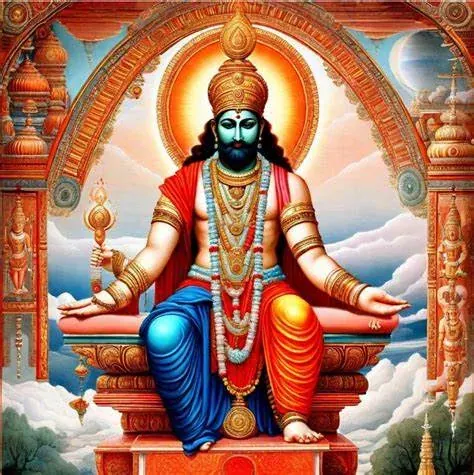
Chhath is offered to सूर्य (Surya, the Sun) and to छठी मैया (Chhathi Maiya), and its two great moments are sunset and sunrise. That gives it a natural link with Vastu, where the East belongs to Surya and Indra and is treated as the direction of light, health and new beginnings.
What makes Chhath unusual is that it honours the Sun in both directions: facing West as it sets on the third evening, and East as it rises on the fourth morning. The offering is made standing in water, the element Vastu gives to the North-East and to Varuna in the West. Few rituals bring light, water and direction together so plainly. Our article on Makar Sankranti looks at another festival of the Sun.
04
How do you set up a Chhath altar in a flat?
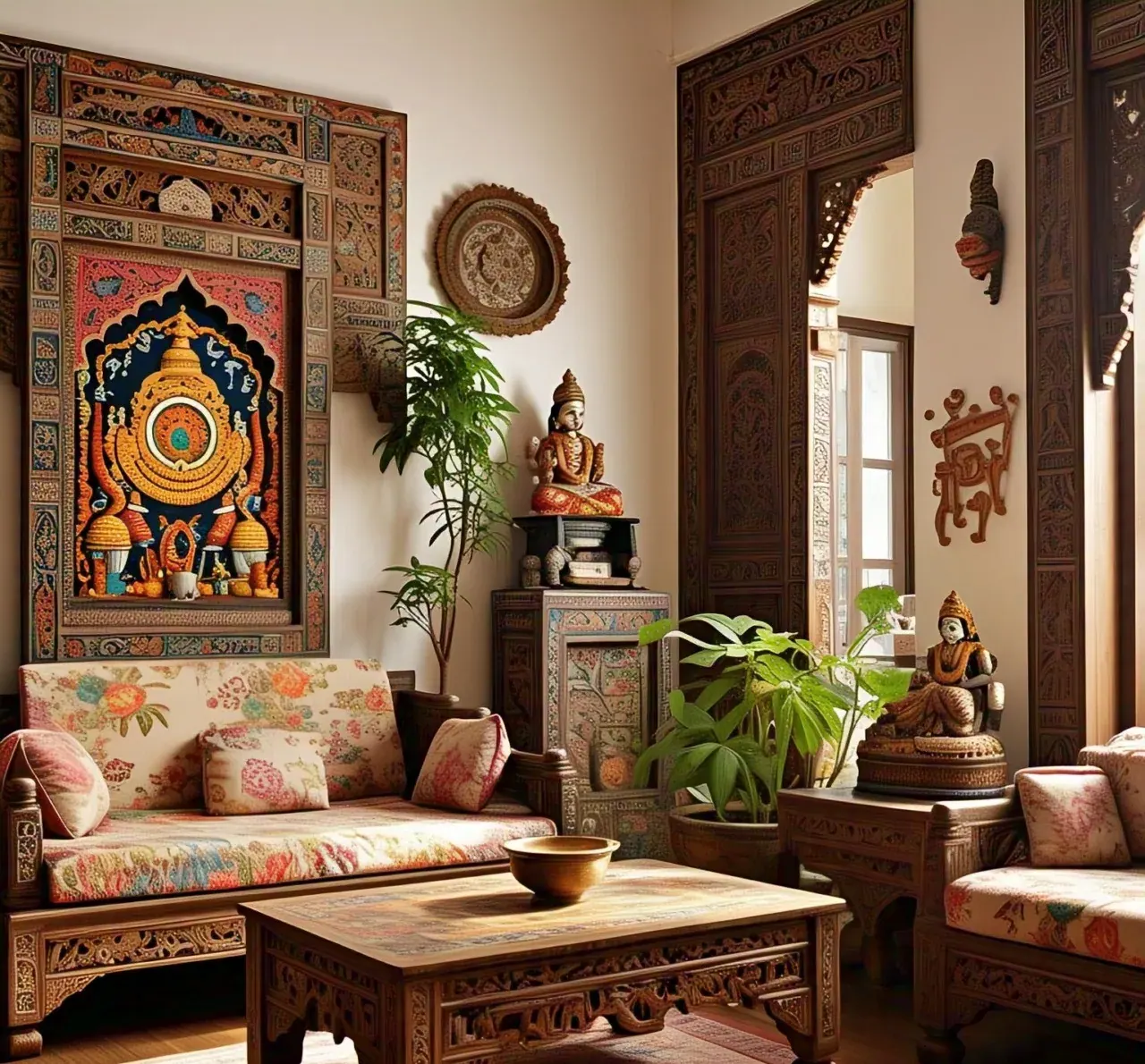
Set the altar in the East or North-East of the home, on a clean low chowki, with the vrati facing East while praying. The North-East is the traditional place for worship in any home, and our guide to the pooja room in small homes covers the options if that corner is taken.
Keep the soop and daura, the bamboo winnowing baskets that carry offerings to the water, at the altar once they are prepared. Clean the kitchen thoroughly before Nahay Khay, since the prasad is made with particular care; many families keep separate vessels for it. In Vastu the kitchen's fire belongs in the South-East, but for Chhath what matters most is that the space is clean.
Keep the altar area free of clutter, light a diya there each evening, and keep the flame clear of the dried leaves and cloth that often decorate the baskets.
05
Can you perform Chhath at home in Mumbai without going to the water?
Yes. Many families who cannot reach a beach or lake perform the arghyas at home, using a tub or small tank of clean water on a terrace or in the society compound, with permission from the society.
An East-facing balcony suits the dawn arghya and a West-facing terrace the evening one. If the building blocks the horizon, face the direction of the Sun anyway; the intention, not the view, carries the offering. In recent years some housing societies and local groups have arranged shared water tanks so that neighbours can gather together. If your flat faces East, you already have the morning light Chhath celebrates.
06
Where do families in Mumbai gather for Chhath?
Families gather at the city's beaches, such as Juhu, at lakes and tanks across the suburbs, and at artificial ponds that civic bodies and local groups arrange in some areas. Mumbai's Chhath has grown with the families from Bihar, Jharkhand and eastern Uttar Pradesh who have made the city home, and the evening arghya draws large, devout crowds.
Arrangements change from year to year, so check with your local group or civic ward office about which sites are set up for 2026, and arrive with time to spare.
07
How do you stay safe at the water and in the crowds?
Stay within the areas marked for the puja, do not wade deeper than you need to, and follow the instructions of police, lifeguards and volunteers. At the sea, tides change the water line quickly; check the tide timings for the day before you go.
01
Children
Hold their hands near the water, write your phone number on a card in their pocket, and agree a meeting point.
02
The vrati
After a long fast, the person offering arghya may feel weak. Someone should stay beside them in the water and on slippery steps.
03
Elders
Find them a place to sit away from the crush, and leave before the crowd does.
04
Lamps
Keep diyas clear of saris, dupattas and the baskets, and away from children's reach.
05
Leave it clean
Take plastic and leftover materials home, and dispose of offerings as the local organisers advise.
08
When to consult a Vastu expert
If setting up the Chhath altar showed you that your home has no clean, light North-East or East corner for worship, that is worth addressing after the festival, for every puja of the year.
Dr. Kimaya Parikh-Ambekar offers Vastu consultations from the Andheri East office, on-site across Mumbai, or as a distant consultation from your floor plan. Remedies are non-structural and suit rented flats.
Questions
Frequently asked
What are the dates of Chhath Puja 2026?
According to most panchangs: Nahay Khay on 13 November, Kharna on 14 November, Sandhya Arghya on Sunday 15 November and Usha Arghya on Monday 16 November. Check your city's panchang.
Which direction should you face for Chhath arghya?
Face the Sun: West for the evening Sandhya Arghya as the Sun sets, and East for the dawn Usha Arghya as it rises.
Can Chhath Puja be done at home in a flat?
Yes. Many families offer arghya from a tub or small tank of clean water on a terrace or in the society compound, with the society's permission.
Where should the Chhath puja altar be placed at home?
In the East or North-East of the home, on a clean chowki, with the vrati facing East while praying.
What is the difference between Sandhya Arghya and Usha Arghya?
Sandhya Arghya is the offering to the setting Sun on the third evening; Usha Arghya is the offering to the rising Sun on the fourth morning, after which the fast is completed.
What safety precautions should be taken at Chhath ghats?
Stay within the marked areas, check tide timings at the sea, keep children's hands held, stay beside the fasting vrati in the water, and follow police and lifeguard instructions.
Want this applied to your own home or office?
Book free first call