




Residential Vastu · 19 September 2026 · 6 min read
Pooja Room Vastu for Small Homes: Where to Place the Mandir
No space for a separate pooja room? Practical pooja room Vastu for small flats — where to place a wall-mounted or corner mandir, which way to face, and what to avoid.
By Dr. Kimaya Parikh-Ambekar, Vastu consultant, Andheri East, Mumbai

01
Where should the mandir be placed in a small flat?
The mandir should be placed in the North-East of the flat, known as ईशान कोण (Ishan Kona, the North-East corner), and if that is not possible, in the North or East. This zone receives the energy of both the North, linked with Kubera and prosperity, and the East, linked with Indra, Surya and vitality.
In a compact Mumbai 1BHK or 2BHK, the North-East corner of the whole flat may be a bedroom, a bathroom or a balcony. When that happens, look at the North-East of the living room instead. Vastu can be applied room by room, so a mandir in the North-East part of the hall is a sound choice.
A dedicated pooja room is lovely but not essential. A small, well-placed, well-kept mandir brings the same sense of devotion into a home.
02
Which mandir designs suit small homes?
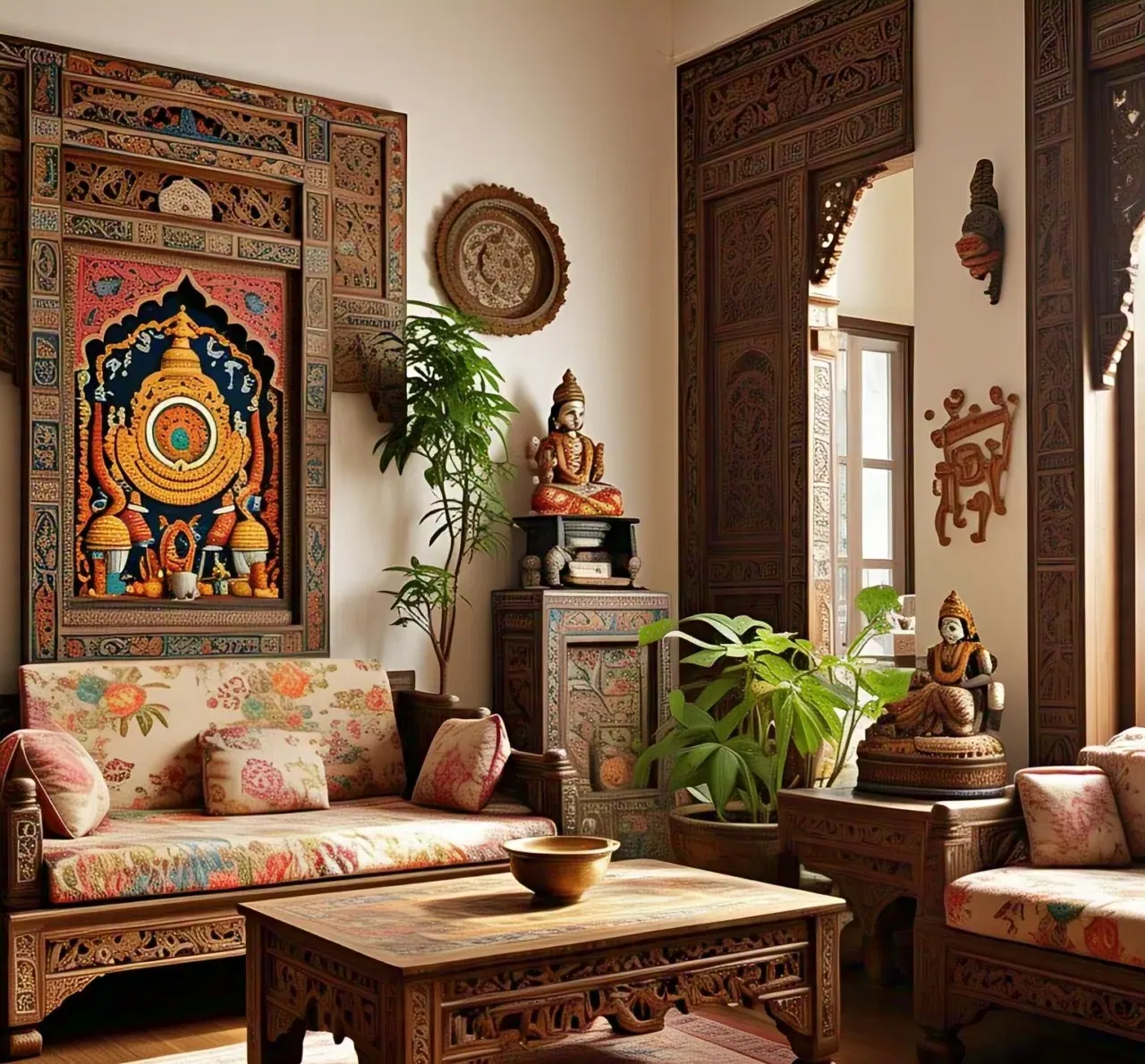
Wall-mounted, corner and cabinet-style mandirs suit small homes because they use vertical space and keep the floor clear.
01
Wall-mounted mandir
A wooden shelf-style mandir fixed on the North or East wall keeps idols at a respectful height and saves floor space. Ensure it is securely anchored.
02
Corner unit
A triangular or L-shaped mandir fits neatly into the North-East corner of a living room.
03
Cabinet with doors
A closed unit with shutters or a curtain keeps the mandir private and dust-free, and can be opened for daily pooja. Useful in living rooms that double as work or guest spaces.
04
Niche in the wall
In new interiors, a shallow niche in the North-East wall with a marble or wooden base looks elegant and takes no room.
03
Which way should idols and the worshipper face?
Idols should face East or West, and the person praying should ideally face East or North. For a mandir on the East wall, the idols face West and you face East while praying, which is a very practical arrangement in most flats.
Avoid placing idols directly against the South or West wall. Keep idols at a height where their feet are roughly at the level of your chest when you are seated or standing to pray, and position the mandir between waist and eye level rather than on the floor.
Idols kept in a home mandir are traditionally no taller than about nine inches. Too many idols of the same deity, or large idols, can make a small space feel crowded.
04
What should you avoid in a small-home pooja space?
A few placements are worth avoiding, mainly to keep the mandir respectful, calm and clean.
01
Bedroom mandirs
Avoid placing the mandir inside a bedroom. If there is truly no other option, place it in the North-East of the room, not facing the bed, with doors or a curtain to close at night.
02
Toilet walls
Do not place the mandir on a wall shared with a toilet, or directly above or below a toilet on another floor.
03
Under stairs or beams
Avoid the space under a staircase in duplexes and directly under a heavy beam in flats.
04
Storage in the mandir
Keep medicines, money, papers and unrelated items out of the mandir unit.
05
Broken or faded images
Respectfully remove broken idols and old, faded pictures, and keep only what you actively worship.
05
Can the mandir be in the kitchen?
The mandir can be in the kitchen only if there is no other option, and then it should sit in the North-East part of the kitchen, away from the stove. Many Mumbai families do this in compact homes, and it can work when handled carefully.
Keep the mandir raised and closed with doors or a curtain while cooking, so it stays free of smoke and grease. Avoid placing it right next to the sink, the stove or the dustbin, and clean it daily. When the family grows or moves, a living-room mandir is the more comfortable long-term choice.
Another option many small families choose is a compact, closed mandir in the dining area or passage, provided it sits on the North or East wall and is not opposite a toilet door. Whichever spot you pick, give it a clear boundary, such as a small rug, a shelf edge or a hanging bell, so it feels set apart from everyday household activity.
06
What colours, materials and lighting suit a mandir?
Light colours, natural materials and gentle lighting suit a mandir. White, cream, light yellow and pale blue create a calm, pure feel, while dark colours, black and heavy reds are usually avoided in the pooja area.
Wood, marble and stone are preferred over plastic or glass. A brass diya or a warm LED lamp keeps the mandir softly lit, and a small bell used during aarti adds the purifying quality of sound. Keep the area fragrant with fresh flowers, incense or a little camphor, taking care with open flames and ventilation.
A short daily ritual, such as lighting a diya and reciting ॐ शान्तिः शान्तिः शान्तिः (Om Shanti Shanti Shanti, peace in body, mind and spirit), keeps the space alive with devotion.
07
When to consult a Vastu expert
Consult a Vastu expert when the North-East of your flat is a toilet, bedroom or kitchen and you are unsure where the mandir should go, or when you are designing interiors for a new home. A compass reading of the floor plan identifies the most suitable wall and corner for your specific layout.
Dr. Kimaya Parikh-Ambekar offers on-site consultations across Mumbai from her Andheri East office and distant consultations using floor plans and photographs. She gives practical, non-structural suggestions that fit the space you actually have.
Questions
Frequently asked
Can I place the mandir in the living room?
Yes, the living room is often the most suitable place for a mandir in a small flat. Place it in the North-East, North or East part of the room, raised and clearly visible.
Can the mandir face the main door?
It is generally preferred that the mandir is not directly in line with the main door. Place it further inside the room, where the space is calmer and more private.
Is a wall-mounted mandir good as per Vastu?
Yes, a wall-mounted mandir is a practical option for small homes, provided it is on the North or East wall, securely fixed and positioned between waist and eye level.
How many idols should be kept in a home mandir?
Keep only a few idols that you actively worship, ideally not taller than about nine inches. Avoid multiple idols of the same deity facing each other.
Can I keep photographs of ancestors in the mandir?
Photographs of ancestors are traditionally kept outside the mandir, often on a South or West wall of the living room, so the pooja space remains dedicated to deities.
Want this applied to your own home or office?
Book free consultation