









Reiki · 19 September 2026 · 5 min read
Reiki Myths and Facts
Is Reiki a religion? Does it replace medicine? Do you have to believe in it? Common Reiki myths answered calmly and honestly, so you know what to expect.
By Dr. Kimaya Parikh-Ambekar, Vastu consultant, Andheri East, Mumbai

01
Why are there so many myths about Reiki?
There are many myths about Reiki because it is gentle, quiet and hard to describe from the outside. People hear about it second-hand, see dramatic portrayals online, or confuse it with other practices.
Reiki is a Japanese relaxation and energy-balancing practice. The word combines Rei (universal) and Ki (life energy), similar to the idea of प्राण (prana, life energy) in Indian traditions. Clearing up the myths helps you decide calmly whether Reiki is right for you, with realistic expectations.
02
Myth: Reiki is a religion
Fact: Reiki is not a religion and does not require you to follow any faith. People of every background — Hindu, Muslim, Christian, Jain, Parsi, Buddhist or non-religious — receive Reiki.
A session does not involve worship, conversion or giving up your own beliefs. Some practitioners, including Dr. Kimaya, may use short Vedic mantras when activating crystals or cleansing a space as part of Reiki Vastu, but you are always free to share your preferences and comfort level.
03
Myth: Reiki replaces doctors and medicines
Fact: Reiki does not replace doctors, medicines, surgery, therapy or any medical treatment. It is complementary wellness, used alongside professional care.
Many people use Reiki to relax during a stressful phase, to feel calmer during recovery or simply to rest. That is valuable, but it is different from treating an illness. A responsible Reiki practitioner will never ask you to stop or change your medication, and will encourage you to keep consulting your doctor.
If you are struggling with your mental health, please reach out to a mental-health professional. In India you can call the free Tele-MANAS helpline on 14416 (or 1-800-891-4416), available 24×7.
04
Myth: You have to believe in Reiki for it to work
Fact: You do not need to believe in Reiki to receive a session; you only need to be open to relaxing. Many first-time clients arrive curious or sceptical.
Experiences vary. Some people notice warmth, tingling or deep calm. Others simply feel rested, and some notice nothing in particular during the session — which is also normal. It is fair to approach Reiki with an open, questioning mind and see how you feel.
05
Myth: Reiki involves massage or undressing
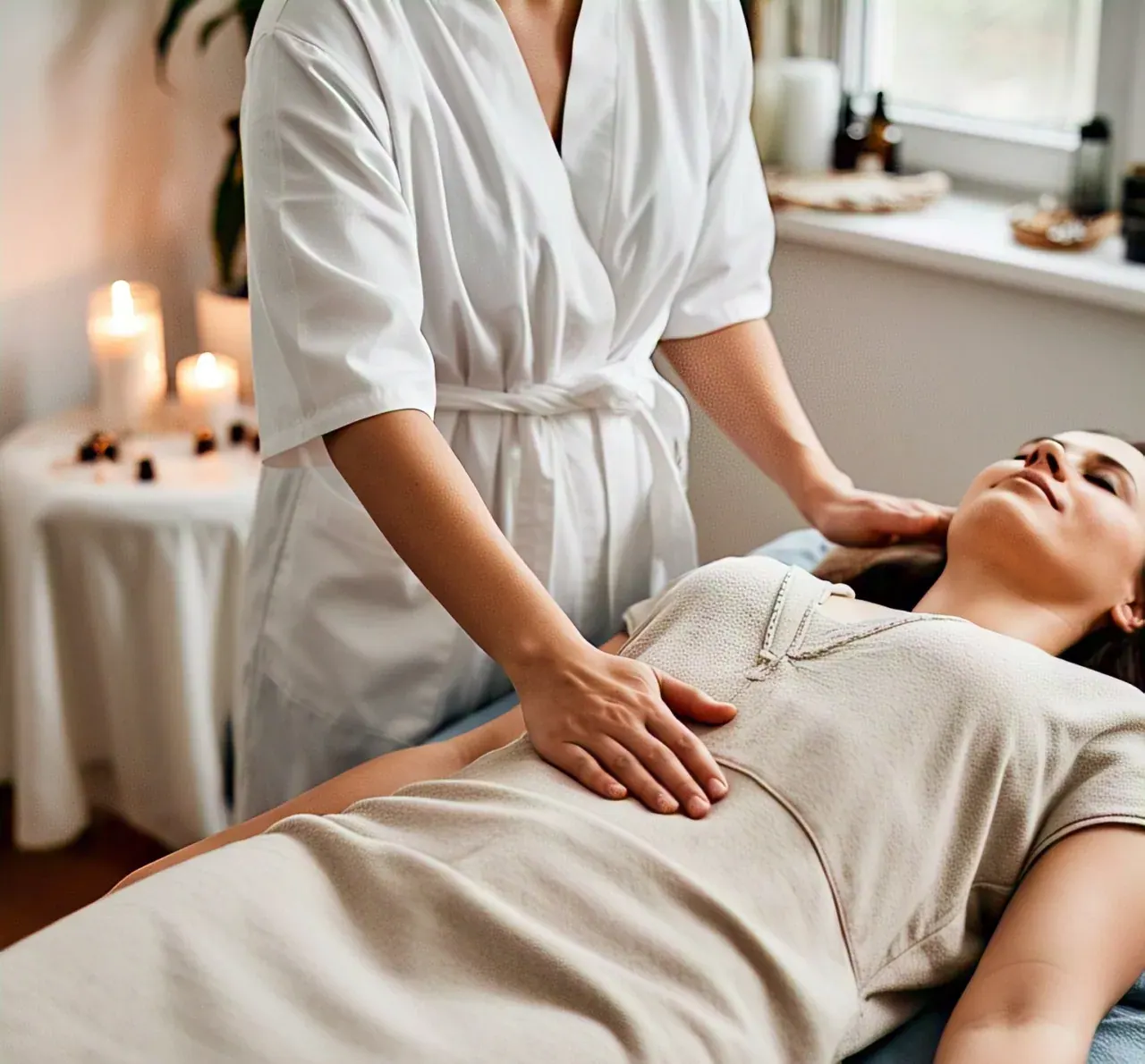
Fact: Reiki involves no massage, no pressure on the body and no undressing. You stay fully clothed and sit or lie comfortably.
01
Light or hovering hands
The practitioner places hands lightly on, or just above, positions from the head to the feet.
02
No manipulation
Muscles and joints are not pressed or moved.
03
Your consent matters
If you prefer hands-off Reiki, simply say so; the practitioner can work with hands slightly above the body.
04
No medicines or oils required
Reiki does not involve ingesting anything.
06
Myth: Distance Reiki cannot be real
Fact: Distance Reiki is a recognised form of Reiki practice, offered by many practitioners for people who cannot attend in person. Reiki teaching holds that the practitioner can send Reiki with intention across distance.
In practice, you set aside a quiet time, sit or lie down comfortably and relax while the session takes place. People describe experiences similar to in-person sessions. As with all Reiki, it is complementary, and you are welcome to try one session and see how it feels for you.
07
Other common Reiki myths
Several smaller myths also come up often. Here are quick, honest answers.
01
Myth: One session solves everything
Fact: Reiki is not a quick fix. Some people feel calmer after one session; others prefer a short series.
02
Myth: Reiki is dangerous or can harm you
Fact: Reiki is gentle and non-invasive. Some people feel emotional or tired afterwards, which usually settles with rest and water.
03
Myth: Only special people can learn Reiki
Fact: Reiki is traditionally taught through attunement by a Reiki teacher, and ordinary people learn it for self-care.
04
Myth: Reiki is only for people
Fact: Reiki principles are also applied to spaces. Reiki Vastu brings Reiki into homes and offices alongside Vastu remedies.
05
Myth: Children and elders cannot receive Reiki
Fact: Reiki can be offered to family members of all ages, with consent and alongside their medical care.
08
When to book a Reiki session
Book a Reiki session when you would like a calm, restful space during a demanding phase of life, or when you are curious and want to experience Reiki for yourself. Dr. Kimaya Parikh-Ambekar offers Reiki at her Andheri East office, Reiki Vastu visits across Mumbai, and distance Reiki for clients elsewhere.
She begins every session with a conversation about what you are experiencing and any medical care you are receiving. You are welcome to ask questions, raise doubts and decide at your own pace, so that the session itself becomes a space of शांति (shanti, peace).
Questions
Frequently asked
Is Reiki scientifically proven?
Reiki is a complementary practice and should not be seen as a proven medical treatment. Many people use it for relaxation, alongside — never instead of — medical care.
Is Reiki against any religion?
Reiki is not a religion and does not ask you to change your beliefs. People of all faiths receive Reiki and continue their own practices.
What does a Reiki session feel like?
Many people feel warmth, tingling or deep relaxation, while others notice little during the session. Both experiences are considered normal.
Can Reiki have side effects?
Reiki is gentle, but some people feel tired or emotional afterwards. Drink water, rest, and speak to your doctor about any health concern.
Can I stop my medicines if I take Reiki?
No, never stop or change medicines because of Reiki. Continue all treatment your doctor has advised; Reiki is only complementary.
Want this applied to your own home or office?
Book free consultation