





Reiki · 19 September 2026 · 6 min read
Reiki Symbols Explained Simply
Cho Ku Rei, Sei He Ki, Hon Sha Ze Sho Nen and Dai Ko Myo sound mysterious, but their purpose is simple. A plain-language guide to Reiki symbols and their meaning.
By Dr. Kimaya Parikh-Ambekar, Vastu consultant, Andheri East, Mumbai
01
What are Reiki symbols?
Reiki symbols are shapes, each with a name and a purpose, that a Reiki practitioner uses to focus intention while channelling healing energy. They are not magic spells or religious icons; they work more like a mental key that helps the practitioner shift attention to a particular quality of energy.
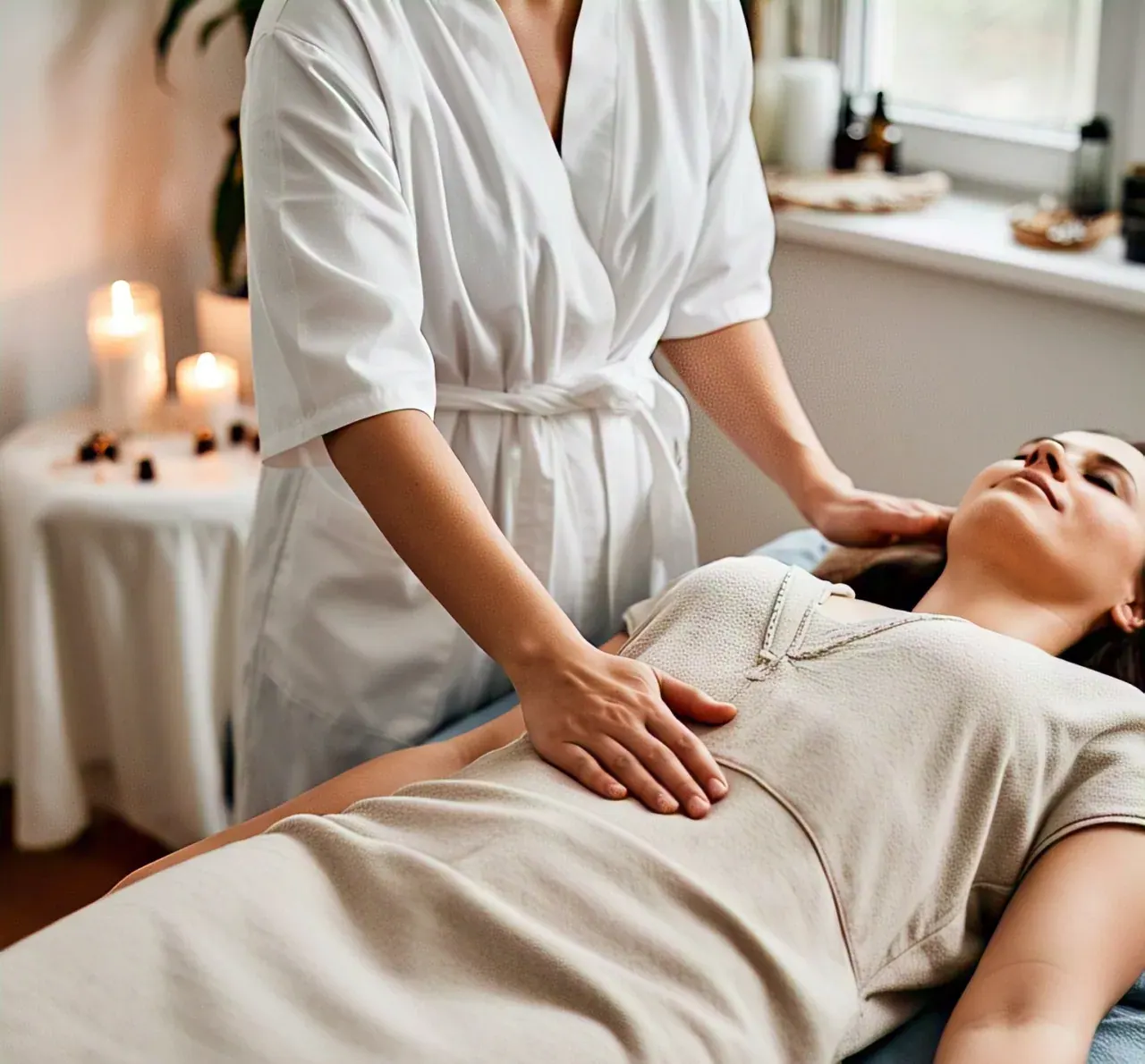
Reiki (pronounced ray-key) is a Japanese healing technique. The word combines Rei, meaning universal, and Ki, meaning life energy, similar to the Indian idea of प्राण (prana, life energy). A practitioner channels this energy through the hands to support relaxation and natural balance in a person or a space.
In many lineages, the symbols are introduced at the second level of training and the master symbol at the third. Different schools draw and use them slightly differently, so this guide keeps to their commonly taught meanings.
02
What does Cho Ku Rei mean?
Cho Ku Rei is commonly known as the power symbol, used to increase or focus Reiki energy in a particular place. It is often described as a light switch that turns the flow on, and is drawn as a spiral with a horizontal and vertical line.
Practitioners use it at the start of a session, over areas that need extra attention, and to create a sense of protection around a person, a room or an object. In Reiki Vastu, it is often used when cleansing a space and when activating remedies such as crystals and pyramids.
03
What does Sei He Ki mean?
Sei He Ki is commonly known as the emotional or mental-emotional harmony symbol, used to support calm and emotional balance. It is associated with gently releasing worry, tension and old emotional patterns.
Practitioners often use it when a person feels unsettled or overwhelmed, or when a home carries a heavy, argumentative atmosphere. It is supportive in nature and is always used alongside, never in place of, proper psychological or medical care when someone is struggling.
04
What does Hon Sha Ze Sho Nen mean?
Hon Sha Ze Sho Nen is commonly known as the distance symbol, used to send Reiki across space and time. It is the longest of the traditional symbols and is based on Japanese characters.
This is the symbol that makes distance Reiki possible. A practitioner can connect with a person in another city, or with a home or office using its photographs and floor plan. It is also used to send healing intention to a past situation or a future event, such as an important exam or an interview.
05
What is the Reiki master symbol, Dai Ko Myo?
Dai Ko Myo is the master symbol, associated with deeper spiritual connection and used by practitioners who have completed master-level training. Its name is often translated as great shining light.
It is traditionally used to strengthen the other symbols, to support spiritual growth and during attunements, when a Reiki teacher passes the ability to channel Reiki to a student. Because of this, it is usually introduced only at the master level.
06
How do the symbols work together in a session?
In a session, the symbols are usually used in combination, each adding a different quality to the same flow of Reiki. A practitioner might begin with Cho Ku Rei to focus the energy, add Sei He Ki when emotional heaviness is felt, and use Hon Sha Ze Sho Nen when the person or space is far away.
The person receiving Reiki does not need to know the symbols or do anything special. They simply lie or sit comfortably, fully clothed, and rest. Many people describe warmth, gentle tingling or deep relaxation, while others feel very little; both experiences are normal.
07
Can anyone use Reiki symbols just by drawing them?
Most Reiki traditions teach that the symbols are activated for a practitioner through attunement, so drawing them without training is not the same as using them in a session. Anyone can look at a symbol, but its use in healing is learned through practice under a teacher.
Respect is part of the practice. Many teachers ask students to draw symbols in the air or visualise them rather than print them everywhere. If you are curious, a simple Level 1 class is a gentle way to begin, as it focuses on self-healing without symbols.
01
Intention matters
Symbols are used with a calm, clear and kind intention for the highest good.
02
Practice matters
Regular self-healing builds sensitivity far more than memorising shapes.
03
Lineages vary
Some styles use additional or different symbols; none is more correct than another.
08
How are Reiki symbols used in Reiki Vastu for homes?
In Reiki Vastu, symbols help a practitioner cleanse a space, dissolve stagnant energy and activate Vastu remedies. Reiki Vastu brings together Reiki and Vastu Shastra, the Indian science of space, so that corrections work on both layout and subtle energy.
01
Scanning
The practitioner senses zones that feel dense or heavy, often starting with the North-East and the centre.
02
Cleansing
Reiki is channelled into those zones to restore a lighter, calmer feel.
03
Activating remedies
Crystals, pyramids and yantras are energised before placement.
04
Distance sessions
With the distance symbol, a home can be treated remotely using photographs and a floor plan.
09
When to book a Reiki session
A Reiki session may help when you feel drained, when a home feels heavy after a difficult period, or when you want to strengthen existing Vastu remedies. Dr. Kimaya Parikh-Ambekar offers Reiki healing and Reiki Vastu from Andheri East, on-site across Mumbai or by distance.
Reiki is a gentle, complementary practice. It supports relaxation and wellbeing and does not replace medical or psychological treatment, so continue any care your doctor has advised.
Questions
Frequently asked
How many Reiki symbols are there?
Traditional Usui Reiki commonly teaches four symbols: Cho Ku Rei, Sei He Ki, Hon Sha Ze Sho Nen and Dai Ko Myo. Some other lineages add further symbols of their own.
Are Reiki symbols secret?
Traditionally the symbols were kept private and shared only with students. Many are now published, but teachers still ask that they be treated with respect and learned properly.
Can Reiki symbols be used for a house?
Yes, practitioners use Reiki symbols to cleanse homes and offices and to activate Vastu remedies. This is the basis of Reiki Vastu.
Which Reiki symbol is used for distance healing?
Hon Sha Ze Sho Nen is the distance symbol. It allows a practitioner to send Reiki to a person or space in another location.
Do I need Reiki training to use the symbols?
Yes, most traditions teach that symbols are used after attunement at the appropriate level. Level 1 focuses on self-healing without symbols.
Want this applied to your own home or office?
Book free consultation