








Reiki · 19 September 2026 · 5 min read
Reiki for Sleep and Relaxation
Struggling to switch off at night? How Reiki for sleep works, what a session feels like, a simple bedtime self-practice, and how Reiki Vastu can make the bedroom more restful.
By Dr. Kimaya Parikh-Ambekar, Vastu consultant, Andheri East, Mumbai
01
What is Reiki, and how can it help with sleep?
Reiki is a Japanese energy-healing practice in which a trained practitioner channels universal life energy through gentle touch or with hands held just above the body. It is used to promote deep relaxation, and relaxation is often the missing step between lying down and actually falling asleep.
The word Reiki is usually translated as universal life energy, an idea close to प्राण (prana, life energy) in Indian thought. When the mind is racing and the body is tense, a Reiki session offers a quiet space to let go. Many people describe feeling warm, heavy, peaceful or drowsy, and some fall asleep during the session itself.
Reiki is a complementary practice. It supports relaxation, but it does not replace medical diagnosis or treatment for insomnia, sleep apnoea or other sleep disorders.
02
Why do so many people struggle to sleep?
Many people struggle to sleep because stress, screens and irregular routines keep the mind alert long after the day is over. Long commutes, late dinners, work messages at midnight and noisy city nights are all familiar in Mumbai.
Worry about family, health or money can keep thoughts looping. Caffeine late in the day, an overheated or cluttered bedroom, and scrolling in bed all make it harder for the body to recognise that it is time to rest.
If poor sleep lasts for several weeks, if you snore loudly, wake up gasping, or feel exhausted every day, please see a doctor. These can be signs of conditions that need medical attention.
Small daytime habits help too. Getting some morning daylight, keeping dinner a little earlier and lighter, and setting a regular wake-up time, even on weekends, help the body settle into a natural rhythm that Reiki and a calm bedroom can then support.
03
What happens in a Reiki session for sleep?
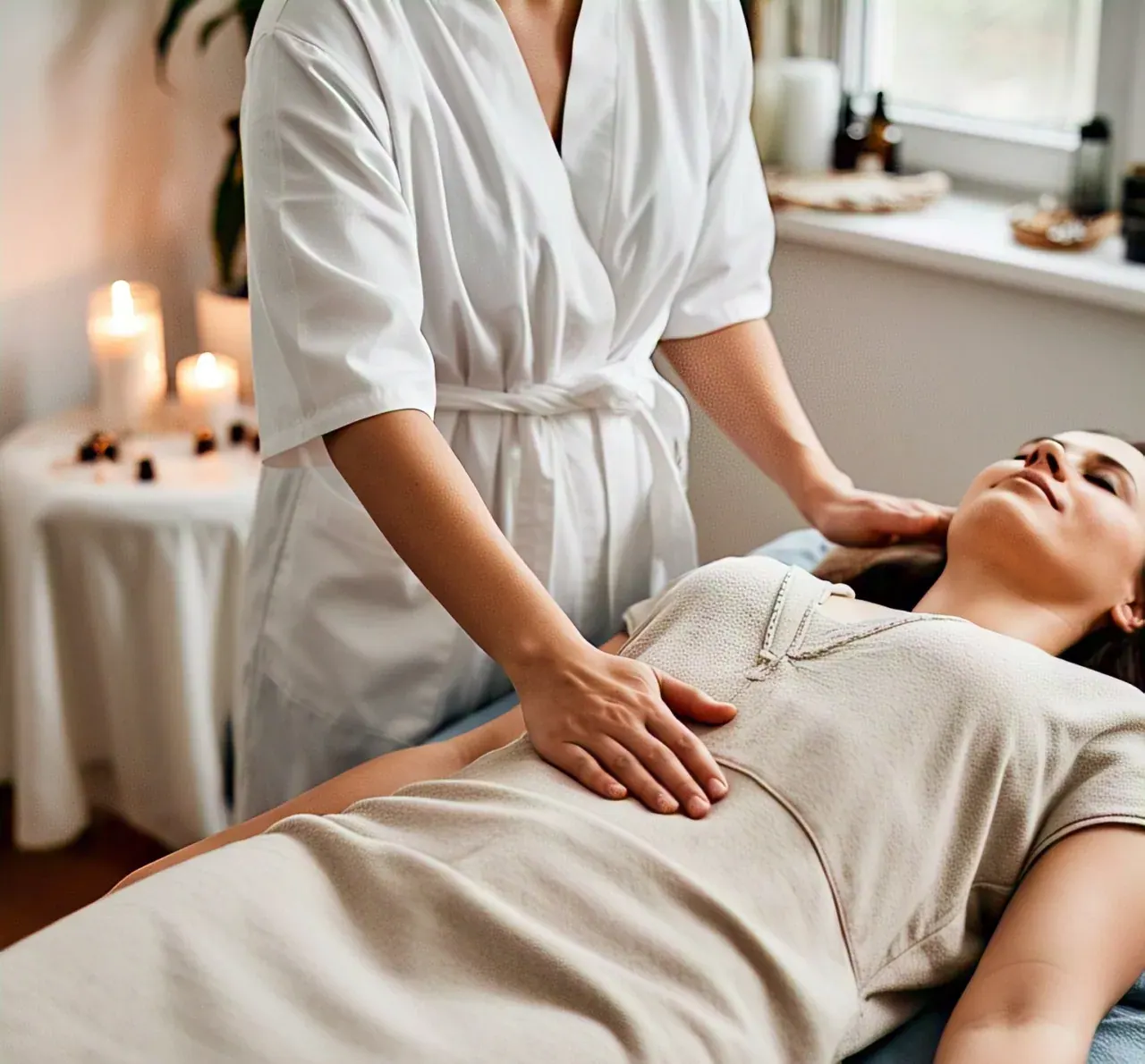
In a Reiki session for sleep, you lie fully clothed on a treatment table or sit comfortably while the practitioner places their hands gently on or just above a series of positions on the head, shoulders, torso and legs. The room is quiet and softly lit.
Sessions often focus on the head, heart and abdomen, areas where people commonly hold tension. You do not need to do anything except breathe and rest. Some people notice sensations of warmth or tingling; others simply feel calm.
At VastuKimaya, Dr. Kimaya Parikh-Ambekar may combine personal Reiki with guidance on your bedroom's Vastu, so that both you and the space where you sleep are supported.
04
Can you do Reiki on yourself before bed?
Yes, people who have been attuned to Reiki can practise a short self-Reiki routine in bed, and anyone can use a similar hands-on relaxation practice with slow breathing. A few minutes is enough to signal the body to slow down.
01
Settle in
Lie on your back, dim the lights and put your phone away. Take three slow, deep breaths.
02
Hands on the forehead
Rest your palms lightly over your forehead and eyes for two to three minutes, letting thoughts pass without following them.
03
Hands on the heart
Move your hands to the centre of your chest and breathe gently for a few minutes.
04
Hands on the abdomen
Place your hands on your lower abdomen, feeling the breath rise and fall.
05
Set an intention
Silently repeat a simple intention, such as "I allow my body to rest", or ॐ शान्तिः (Om Shanti, peace).
05
How can Reiki Vastu make the bedroom more restful?
Reiki Vastu combines Reiki space healing with Vastu placement to make the bedroom feel calmer and more supportive of rest. The space is cleansed of heavy energy, and simple adjustments are made to the layout.
01
Sleeping direction
Sleep with your head towards the South or East, with the headboard against a solid wall.
02
Bedroom zone
The South-West is traditionally the zone for the master bedroom, associated with stability.
03
Remove disturbances
Avoid mirrors facing the bed, beams directly over it and electronics near your head.
04
Calming colours
Soft, light or earthy shades support a restful atmosphere.
05
Space cleansing
Reiki space healing, a bowl of sea salt replaced regularly, or an Amethyst near the bed can help the room feel lighter.
06
How often should you have Reiki for sleep?
How often you have Reiki depends on your needs, but many people begin with a few sessions spaced over several weeks and then continue with self-practice or occasional sessions. There is no fixed number that suits everyone.
Consistency matters more than intensity. A short, regular bedtime practice, a steady sleep schedule and a calm bedroom tend to be more helpful than an occasional long session. Pay attention to how you feel and discuss the frequency with your practitioner.
Continue any treatment your doctor has prescribed. Reiki can sit comfortably alongside it.
07
When to book a Reiki session
Consider booking a Reiki session when stress or an overactive mind is keeping you awake, when you want to learn a relaxing bedtime routine, or when your bedroom itself feels unsettled. It can be especially supportive during demanding periods at work or at home.
Dr. Kimaya Parikh-Ambekar offers Reiki healing and Reiki Vastu from the Andheri East office, with on-site space healing across Mumbai and distant Reiki where suitable. She will also suggest simple changes to your bedroom so that the calm continues after the session.
If sleeplessness is linked to anxiety, low mood or trauma, please also reach out to a mental-health professional. In India you can call the free Tele-MANAS helpline on 14416 (or 1-800-891-4416), available 24×7.
Questions
Frequently asked
Does Reiki help with insomnia?
Reiki can support relaxation, which many people find helps them fall asleep more easily. It is not a treatment for insomnia, so persistent sleep problems should be checked by a doctor.
Can I fall asleep during a Reiki session?
Yes, it is common to fall asleep during a Reiki session. The practice is deeply relaxing, and falling asleep does not reduce its benefit.
Can Reiki be done remotely for sleep?
Yes, distant Reiki is practised and many people use it for relaxation at bedtime. Discuss with your practitioner whether an in-person or distant session suits you.
Which direction should I sleep for better rest as per Vastu?
Vastu suggests sleeping with your head towards the South or East. Keep the headboard against a solid wall and avoid mirrors facing the bed.
Is Reiki safe to use with sleep medication?
Reiki is gentle and non-invasive and is generally used alongside medical treatment. Never stop or change medication without your doctor's advice.
Want this applied to your own home or office?
Book free consultation