





Festivals & Rituals · · 5 min read
Haldi-Kumkum 2027: Hosting the Sankranti Gathering at Home, the Vastu Way
Planning Haldi-Kumkum at home in 2027? The Sankranti to Ratha Saptami window, how to prepare the entrance, where to seat guests and keep the thali, what to give as vaan, and how to host in a small flat.
By Dr. Kimaya Parikh-Ambekar, Vastu consultant, Andheri East, Mumbai
Read this in: हिन्दी
01
When can Haldi-Kumkum be held in 2027?
Haldi-Kumkum can be held on any convenient day from Makar Sankranti up to रथसप्तमी (Ratha Saptami), which falls on Saturday 13 February 2027. That window is the tradition in many Maharashtrian families, though some keep a shorter or longer period.
Makar Sankranti 2027 is listed on Thursday 14 January in many calendars and on Friday 15 January in some panchangs, because the Sun's entry into Makara falls late on the night of 14 January. Check Kalnirnay or your family's panchang for the day you follow.
Most hostesses choose a weekend evening in the second half of January or early February so that working friends can come. This article gives no muhurat; if your family prefers a particular day, your elders will guide you.
02
What is Haldi-Kumkum and why is it hosted at home?
हळदी-कुंकू (Haldi-Kunku) is a Maharashtrian gathering in which women invite other women home, apply haldi and kumkum to each other, share til-gul and give a small gift called वाण (vaan). It is a way of renewing friendships with neighbours, relatives and colleagues after the Sankranti festival.
Each guest is welcomed with haldi and kumkum on the forehead, a dab of ittar, a sprinkle of rose water from a gulabdani, til-gul and the vaan as she leaves. Many women wear black on Sankranti, a winter custom in Maharashtra, and some carry it into the gatherings that follow.
Customs vary by community and family. Many hostesses today invite every woman friend and neighbour, whatever her marital status, and that warmth is in keeping with the spirit of the day. The til-gul and the Sun's significance are covered in Makar Sankranti and Vastu; this article is about hosting.
03
How should the entrance be prepared for guests?
Prepare the entrance by cleaning the doorstep, drawing a small rangoli and keeping the door able to open fully. The main door is where every guest's first impression forms, and in Vastu it is the mouth of the home through which energy enters.
01
Clean and light
Wipe the door, the frame and the nameplate, and make sure the lobby or landing light works.
02
Rangoli
A simple design of haldi, kumkum and white works well. Our guide to rangoli at the entrance explains colours and placement for a shared lobby.
03
Toran
Fresh mango leaves or marigolds across the door frame; see toran and main door decoration.
04
Footwear
Set out a temporary rack or mat to one side so that slippers do not pile up in front of the door. The shoe rack and entrance lobby guide has more ideas.
04
Where should guests be seated for Haldi-Kumkum?
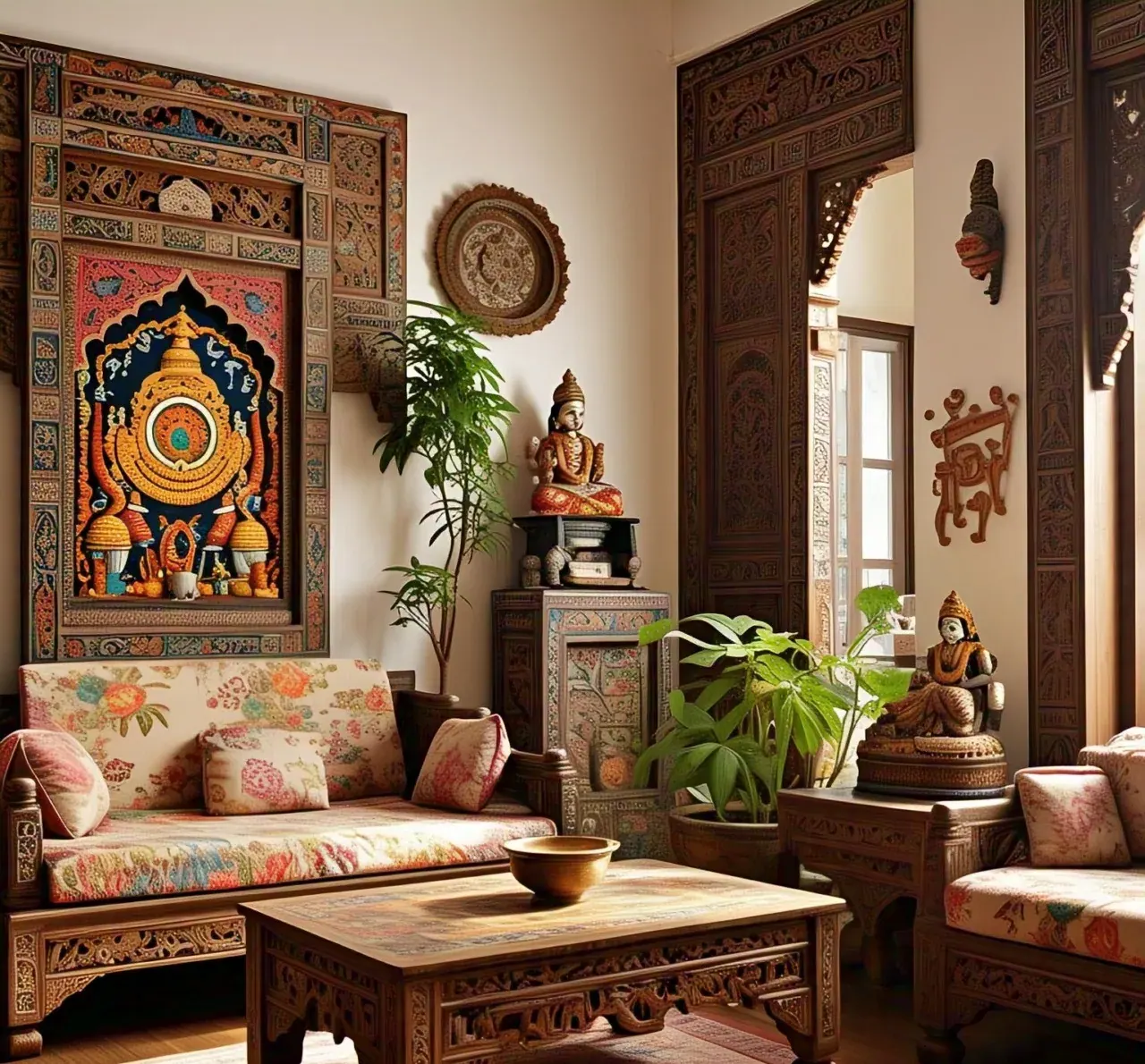
Seat guests on sofas and chairs along the South and West walls, so that they face North or East, and keep a lighter seating area in the North-West for those who come and go. This follows the same pattern as everyday living room seating.
The North-West is the zone of Vayu, the air element, linked with movement and conversation. It suits a gathering where guests arrive, chat for a while and leave for the next home. Elders can have the most comfortable chairs on the South-West side, with a solid wall behind them.
Keep the centre of the hall, the ब्रह्मस्थान (Brahmasthan), open. A light durrie or mat for floor seating is fine there, but avoid placing the snack table or a stack of chairs in the middle of the room.
05
Which direction should the haldi-kumkum thali be kept?
Keep the haldi-kumkum thali in the North-East or East of the hall, or beside the mandir, until guests arrive. The North-East, ईशान्य (Ishanya), is the zone of prayer and clarity, and keeping the thali there gives it a place of respect.
When you apply haldi and kumkum, stand or sit so that you face East or North if the room allows it. If it does not, do not worry; the welcome matters more than the angle.
01
On the thali
Haldi, kumkum, ittar, a gulabdani of rose water, a few grains of rice and a small diya if you like.
02
Til-gul
In a covered box or bowl next to the thali.
03
Vaan
In a basket near the North-West or close to the door, so that it is handed over as each guest leaves.
04
The diya
On a stable plate, away from saree pallus, dupattas and paper decorations.
06
What is given as vaan at Haldi-Kumkum?
Vaan is a small, useful gift given to each guest, traditionally a household item such as a steel bowl, a small plate or a comb. Many families now choose practical, long-lasting gifts and avoid single-use plastic.
Popular choices include cloth or jute bags, steel or brass katoris, small potted plants or tulsi saplings, seed packets, notebooks for children who come with their mothers, and kitchen towels. Many families avoid sharp objects such as knives or scissors as gifts; follow your own family's custom.
Choose something you would be happy to receive yourself. A modest, thoughtful vaan is in keeping with the tradition; there is no need for an expensive one.
07
How can Haldi-Kumkum be hosted in a small flat?
Host Haldi-Kumkum in a small flat by inviting guests across a window of a few hours instead of all at once. A two- or three-hour 'open house' in the evening keeps the hall from overcrowding and gives you time with each guest.
01
Clear the hall
Move dining chairs, the ironing board and extra cartons out of the hall a day before. Floor seating on a durrie takes less space than chairs.
02
Keep a clear path
Leave a free route from the door to the seating and back, so that guests arriving and leaving do not have to squeeze past each other.
03
Ask for help
A daughter, sister or friend can hand out vaan and til-gul while you apply haldi-kumkum.
04
Air and light
Open windows for fresh air, especially if you light dhoop or agarbatti, and keep the hall evenly lit.
05
Be a good neighbour
Let your immediate neighbours know about the gathering, and keep the shared lobby free of footwear.
08
When should you consult a Vastu expert?
Consult a Vastu expert if your hall always feels cramped or dark when people visit, if the main door opens straight onto a wall or a toilet door, or if you are setting up a new home and want the entrance and living room to welcome guests well.
Dr. Kimaya Parikh-Ambekar of VastuKimaya, based in Andheri East, Mumbai, offers on-site consultations across Mumbai and distant consultations from floor plans and photographs for homes and flats. Remedies are non-structural and suit rented homes too. You can book an appointment when it suits you.
Questions
Frequently asked
When can Haldi-Kumkum be held in 2027?
By tradition, from Makar Sankranti (14 or 15 January 2027, depending on the calendar) up to Ratha Saptami on Saturday 13 February 2027. Check Kalnirnay or your family's panchang for the dates you follow.
Where should guests be seated for Haldi-Kumkum?
Along the South and West walls, facing North or East, with lighter seating in the North-West for guests who come and go. Keep the centre of the hall open and give elders a seat with a solid wall behind.
Which direction should the haldi-kumkum thali be kept?
Keep the thali in the North-East or East of the hall, or beside the mandir, until guests arrive. While applying haldi-kumkum, face East or North if the room allows it.
What is given as vaan at Haldi-Kumkum?
A small, useful gift such as a steel bowl, a cloth bag, a small plant, seed packets or a notebook. Many families now avoid single-use plastic, and many avoid sharp objects as gifts.
How can Haldi-Kumkum be hosted in a small flat?
Invite guests across a two- or three-hour window instead of all at once, clear extra furniture out of the hall, use floor seating and keep a free path from the door to the seating.
Is there a fixed muhurat for Haldi-Kumkum?
No single muhurat applies to every home. Most hostesses choose a convenient evening between Sankranti and Ratha Saptami; if your family prefers a particular day, your elders or a panchang will guide you.
Want this applied to your own home or office?
Book free first call