

Tarot · 21 September 2026 · 7 min read
What Is Tarot Reading? A Beginner's Guide
A plain-language introduction to tarot: where the deck came from, how its 78 cards are organised, what a reading can offer and the things it honestly cannot do.
By Dr. Kimaya Parikh-Ambekar, Vastu consultant, Andheri East, Mumbai
01
What is tarot reading in simple terms?
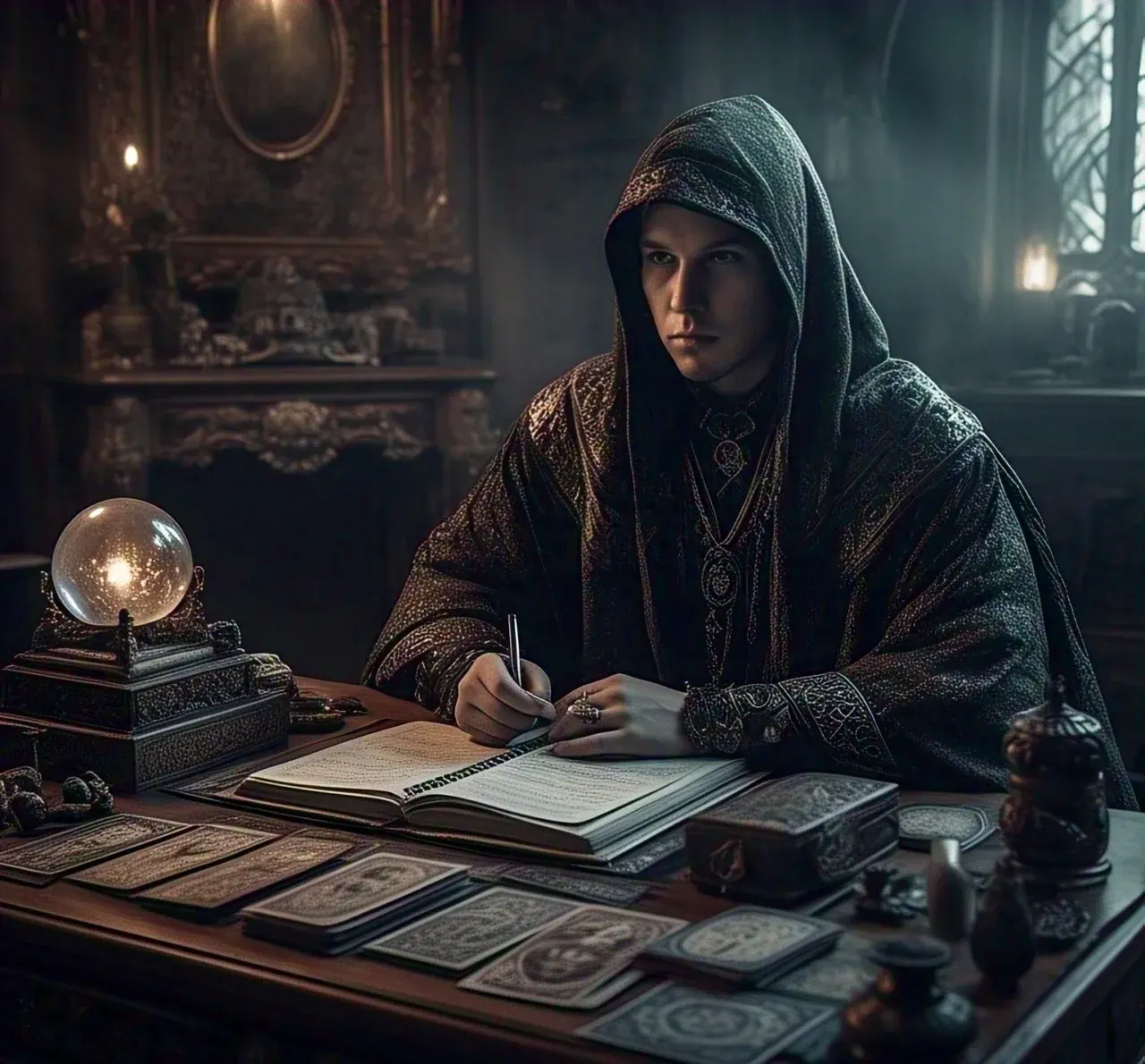
Tarot reading is the practice of drawing cards from a deck of seventy-eight illustrated cards and using their images and long-established meanings to think more clearly about a question. The reader lays the cards out in a pattern, explains what each traditionally represents, and then works with you to see how those ideas relate to your own life.
The important word is 'relate'. A card does not deliver a message from outside; it offers a picture — a figure walking away from something, a hand holding a cup, a tower struck by lightning — and pictures are good at pulling out thoughts that words alone miss. Psychologists would call this projection; older traditions would call it a mirror. Either way, the useful material comes from you.
This is why two people can draw the same card about very different situations and both get something honest out of it.
02
Where does the tarot deck come from?
The tarot deck began in fifteenth-century Italy as a set of playing cards for a trick-taking game, with an extra suit of illustrated trump cards. It was several centuries before anyone used it for reflection or divination.
From the late eighteenth century onwards, European occultists began attaching symbolic systems to the deck. In the early twentieth century the Rider–Waite–Smith deck was published in London, illustrated by Pamela Colman Smith, and it turned every card — not just the trumps — into a readable scene. Most decks sold today follow that visual tradition, and the Rider–Waite–Smith is the deck Dr. Kimaya reads, which is why a beginner can often make sense of a card simply by describing what they see in it.
It is worth being honest about this history. Tarot is not an ancient Egyptian or ancient Indian science, whatever some books claim. It is a European card deck that people have found useful for structured reflection — and it sits comfortably alongside Indian practices without needing a borrowed pedigree.
03
How are the 78 cards organised?
The deck divides into 22 Major Arcana cards and 56 Minor Arcana cards, and the split matters when you read. The Majors point to large themes and turning points; the Minors deal with everyday texture — work, feelings, conversations, money.
01
Major Arcana (22 cards)
From The Fool to The World, these describe stages of a life journey: beginnings, choices, upheaval, patience, completion.
02
Cups (14 cards)
Emotions, relationships, intuition and the inner life. Associated with the element of water.
03
Wands (14 cards)
Energy, drive, creativity and enterprise. Associated with fire.
04
Swords (14 cards)
Thought, communication, conflict and clarity. Associated with air.
05
Pentacles (14 cards)
Work, money, the body and material security. Associated with earth.
04
How does a reading actually work?
A reading works by framing a question, drawing a set number of cards into fixed positions, and interpreting each card in the light of the position it lands in. The pattern of positions is called a spread.
A three-card spread might read as background, present situation and likely direction of travel. A single card might be the theme of your day. Larger spreads add positions for what is helping, what is in the way and what you may be overlooking. The structure is what keeps a reading from drifting into vague talk.
Cards sometimes land reversed. A reversal is not a bad omen; it usually softens the card's theme or turns it inward — a delay, a hesitation, or something you already know but have not said aloud. Dr. Kimaya reads reversals this way rather than as warnings.
Each card is essentially a प्रतीक (pratik, a symbol) — something that stands in for a larger idea so the mind can handle it. Indian traditions are entirely comfortable with this way of working; yantras, deities and colours all function as symbols that carry meaning. Tarot uses the same principle with a different vocabulary.
05
What can tarot help with, and what can it not do?
Tarot can help you articulate a problem, see a familiar situation freshly, notice your own resistance and choose between options you have already been circling. It cannot tell you what will happen.
Nobody can predict a specific event, a date or another person's decision, and a reading that claims to is overstepping. Equally, tarot is not a substitute for expertise. A doctor is the right person for symptoms, a lawyer for a legal dispute and a qualified financial adviser for money decisions. Where a question is really one of those, an honest reader will say so.
If a reading touches on grief, anxiety or a mood that has been heavy for a while, please also speak to a mental-health professional. In India you can call the free Tele-MANAS helpline on 14416 (or 1-800-891-4416), available 24×7.
06
Can you learn to read tarot yourself?
Yes, and a simple daily practice is the easiest way to begin. You do not need a teacher, a gifted lineage or an expensive deck to start reading for yourself.
Pick a deck whose artwork you like. Draw one card each morning, write a line about what you see in the image before you look up any meaning, and revisit it at night. Within a few weeks the cards stop being a list to memorise and start being people and situations you recognise.
Two cautions. Do not read for yourself when you are highly distressed — you will simply find your fear in every card. And avoid drawing repeatedly on the same question hoping for a nicer answer; that is anxiety, not practice.
07
How does tarot fit with Vastu and Reiki?
Tarot fits as the conversational tool among practices that otherwise work on space, numbers and energy. Each addresses a different layer of the same life.
Vastu adjusts the home or workplace — direction, placement, light and flow. Reiki Vastu works with the energy of people and spaces. A tarot reading is where you sit with a live decision and think it through out loud. Clients often use one to make sense of what another has surfaced.
08
When to book a tarot reading
Book a reading when a question matters enough to deserve proper attention and your own thinking has stopped moving. Beginners often find their first session most useful when it is about something concrete rather than 'my life in general'.
Dr. Kimaya Parikh-Ambekar offers tarot readings alongside Vastu consultancy, Reiki, crystal therapy at VastuKimaya in Andheri East, Mumbai. If you are new to the cards, say so when you book — the session can be paced as an introduction, with the meaning of each card explained as it appears.
Questions
Frequently asked
What is tarot reading used for?
It is used to reflect on a specific question: understanding a situation, seeing options, noticing feelings you have not named and deciding on practical next steps.
Is tarot against Hindu belief?
Tarot is a card-based reflection tool, not a religion, and it asks nothing of your faith. Many people use it simply as a structured way to think, alongside whatever they believe.
How many cards are in a tarot deck?
Seventy-eight: 22 Major Arcana cards and 56 Minor Arcana cards spread across the four suits of Cups, Wands, Swords and Pentacles.
Do reversed cards mean bad news?
No. A reversal softens a card's theme or turns it inward — a delay, a hesitation, or something known but unsaid. It is never a punishment or an omen.
Can tarot tell me when something will happen?
No. Timing is one of the things tarot genuinely cannot do, and any reader offering exact dates is claiming more than the cards can support.
Want this applied to your own home or office?
Book free consultation