





Health & Wellbeing · 19 September 2026 · 6 min read
Brahmasthan and Wellbeing: Keeping the Centre Open
The centre of your home is where every direction meets. Brahmasthan Vastu explains why this space should stay open and light, and how to care for it in a compact flat.
By Dr. Kimaya Parikh-Ambekar, Vastu consultant, Andheri East, Mumbai
01
What is the Brahmasthan in Vastu?
The ब्रह्मस्थान (Brahmasthan, the place of Brahma) is the central zone of a home or plot. On the वास्तु पुरुष मंडल (Vastu Purusha Mandala), Brahma occupies the middle squares, surrounded by the devtas of every direction.
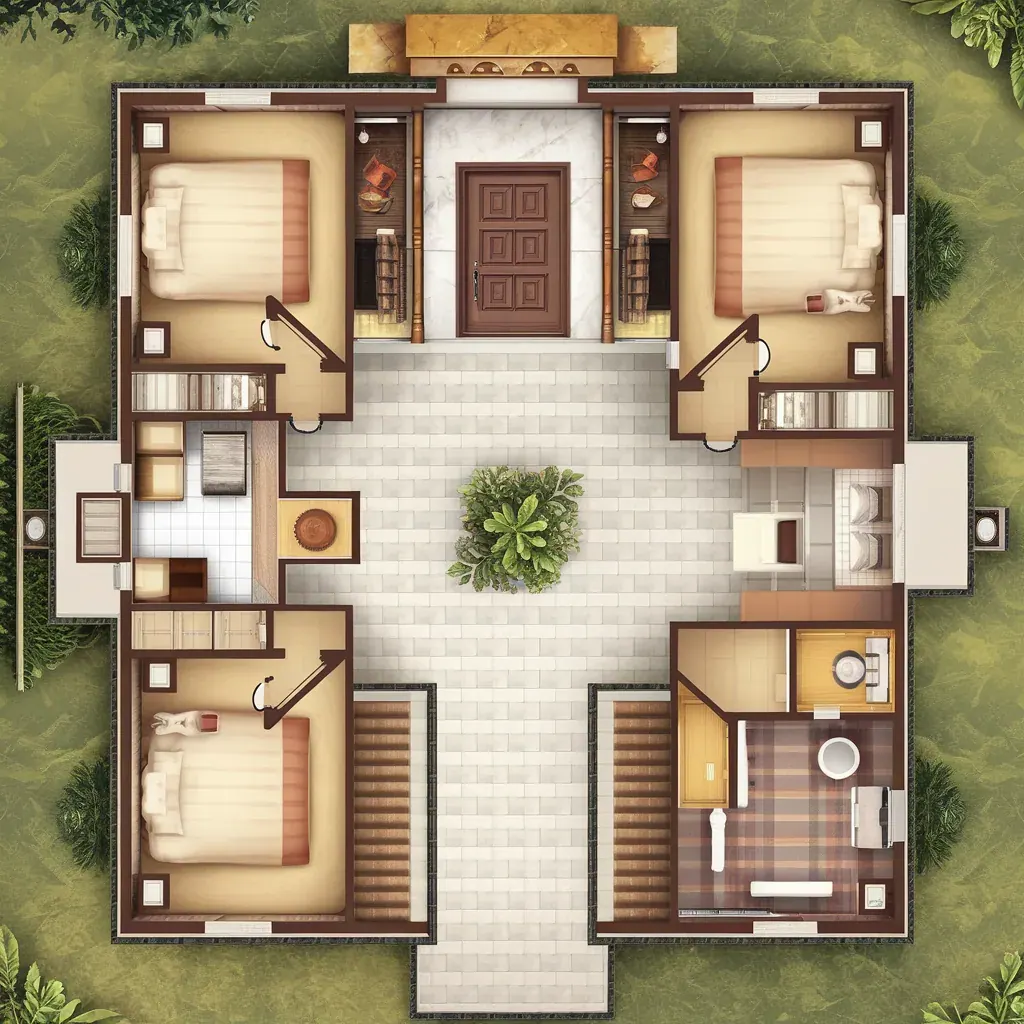
Among the पंचतत्व (Pancha Tattva, the five elements), the centre represents आकाश (Akasha, space). It is the zone that connects all other zones. Traditional Indian homes expressed this with an open courtyard, or aangan, where light, air and family life met. Modern flats rarely have a courtyard, but the principle of an open, breathing centre still applies.
02
Why does Vastu link the centre with wellbeing?
Vastu links the centre with wellbeing because it is seen as the heart of the home, through which प्राण (prana, life energy) flows to every room. When the centre is open and light, the whole home is believed to feel more balanced and connected.
In everyday terms, an open centre makes a home easier to move through, brighter and less cramped. Families often gather in the central hall, so a clear, pleasant centre naturally supports togetherness. Vastu also traditionally associates a blocked or heavy centre with a sense of stagnation and heaviness in the household.
Vastu is a complementary approach to wellbeing. It can make surroundings feel calmer, but it does not replace medical, psychological or other professional care for any health concern.
03
What should not be in the Brahmasthan?
Toilets, heavy furniture, staircases, pillars, beams, clutter and storage should ideally not be in the Brahmasthan. These are considered to press down on or pollute the most sensitive zone of the home.
01
Toilets and drains
A toilet in the centre is one of the Vastu placements that most needs attention.
02
Heavy furniture
Large sofas, storage units or dining tables placed squarely in the middle.
03
Staircases and lifts
In duplexes and bungalows, stairs at the centre are traditionally avoided.
04
Pillars and beams
A column or heavy beam through the centre is believed to create pressure.
05
Clutter
Laundry piles, shoes, school bags, cartons and unused items.
06
Dark corners
A dim, windowless centre with no lighting.
04
How do you find the Brahmasthan in a flat?
Find the Brahmasthan by drawing your flat's floor plan to scale, marking the outer walls, and dividing it into a 3 × 3 grid; the middle square is the centre. For irregular layouts, the centre is found by balancing the overall shape rather than simply measuring the middle of one room.
In many Mumbai flats the centre falls in the hall, a passage or the junction between the living and dining areas. Sometimes it falls inside a bedroom wall or even a bathroom. Because the calculation for L-shaped and irregular plans can be tricky, a consultant uses compass readings and the full plan to locate it accurately.
05
How can you keep the centre open in a small home?
Keep the centre open in a small home by moving heavy pieces to the walls, using light and foldable furniture, and clearing the floor daily. Small, consistent habits make the biggest difference.
01
Push furniture to the edges
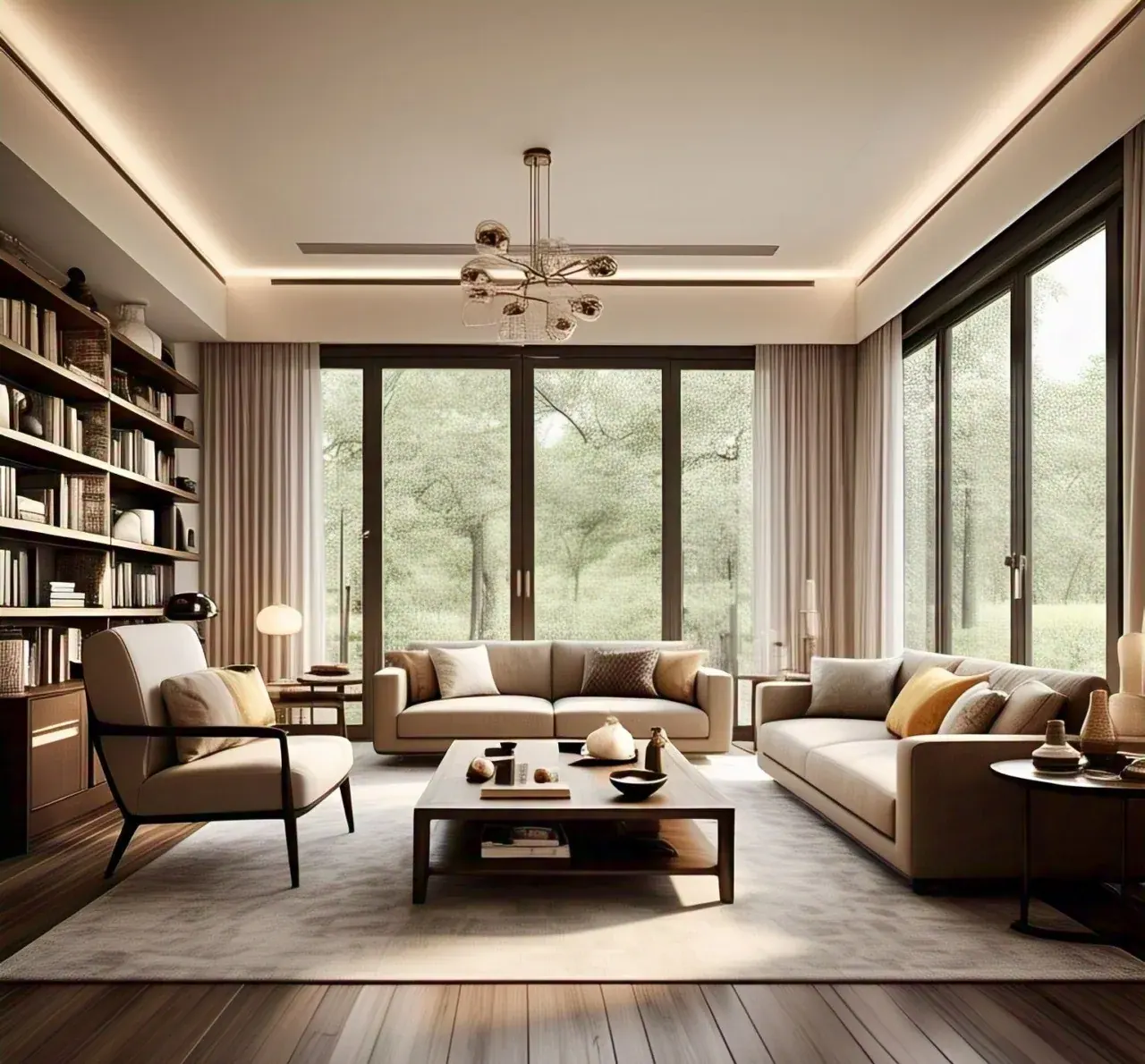
Place sofas and storage along the South and West walls, leaving the middle of the hall clear.
02
Use a light rug
A light-coloured rug marks the centre as a gathering space without adding weight.
03
Brighten it
Add a ceiling light or a pendant lamp, and keep it on in the evening.
04
Choose light colours
White, cream and pale yellow on nearby walls and ceilings keep the centre airy.
05
Evening reset
Spend five minutes each night clearing whatever has gathered in the centre.
06
What if a toilet or pillar is already in the centre?
If a toilet or pillar is already in the centre, it can be balanced with non-structural remedies rather than demolition. VastuKimaya's remedies are designed for real homes where walls cannot move.
01
Toilet in the centre
Keep the door closed and the lid down, keep it spotless and dry, use a bowl of rock salt changed weekly, and ask a consultant about pyramid or metal remedies.
02
Pillar or column
Soften it with light colours, wrap it in a light fabric or wood panel, or place plants and lighting around it.
03
Beam overhead
A false ceiling or a light fabric drape can visually soften the beam.
04
Kitchen spill-over
If the kitchen opens onto the centre, keep the doorway clear and the space tidy.
07
Which simple practices refresh the centre of the home?
Light, sound and salt are simple, gentle ways to refresh the centre of the home. Many families find these practices calming as part of a weekly routine.
Mop the central area with a little rock salt in the water once a week. Ring a bell or play soft mantra chanting there in the morning. Light a diya or camphor in the evening, safely, and open the windows to let fresh air move through. On festivals, a small rangoli at the centre of the hall is a traditional and joyful way to honour this zone. Reiki Vastu and space cleansing can also be used when a home feels heavy after illness, conflict or a long period of being closed.
08
When to consult a Vastu expert
Consult a Vastu expert when you are unsure where your home's centre lies, when a toilet, staircase or pillar sits there, or when you are planning interiors and want the centre kept open from the start. Dr. Kimaya Parikh-Ambekar can locate the Brahmasthan precisely and suggest suitable remedies.
She meets clients at the Andheri East office, visits homes across Mumbai, and offers distant consultations using floor plans and photographs.
Questions
Frequently asked
What should be kept in the Brahmasthan of a home?
The Brahmasthan is ideally kept empty, clean and well lit. A light rug, a small rangoli on festivals or gentle lighting are fine; heavy objects are not.
Is a toilet in the centre of the house a Vastu defect?
Yes, a toilet in the centre is considered a significant Vastu imbalance. It can be supported with non-structural remedies such as salt, pyramids, metal and strict cleanliness.
Can I keep a dining table in the Brahmasthan?
A heavy dining table in the exact centre is not ideal. Shift it slightly towards the West, or use a lighter, foldable table in compact flats.
Can a pooja room be in the Brahmasthan?
Some traditional homes keep a sacred space at the centre, but in flats the North-East is the usual choice for a pooja room. Keep the centre itself open.
Does keeping the centre open improve health?
An open centre can make a home feel brighter and calmer, which many people find supportive. It complements, and does not replace, medical care for any health concern.
Want this applied to your own home or office?
Book free consultation