




Vastu Shastra · · Updated · 6 min read
Vastu Purusha Mandala Explained
The Vastu Purusha Mandala is the sacred grid at the heart of Vastu Shastra. What it is, the story behind it, how its zones map onto your home, and why it still matters for modern flats.
By Dr. Kimaya Parikh-Ambekar, Vastu consultant, Andheri East, Mumbai
Read this in: हिन्दी
01
What is the Vastu Purusha Mandala?
The वास्तु पुरुष मंडल (Vastu Purusha Mandala) is a sacred square diagram that maps the energy of a site and forms the foundation of Vastu Shastra. Mandala means a geometric diagram; Vastu Purusha is the cosmic being believed to reside within every plot of land and every building.
In practice, the mandala is a grid laid over a plot or floor plan. Each square, or pada, is assigned to a deity and carries particular qualities. By understanding which zone governs what, Vastu guides where the entrance, kitchen, bedrooms, pooja room and other spaces are placed for balance and harmony.
02
What is the story of the Vastu Purusha?
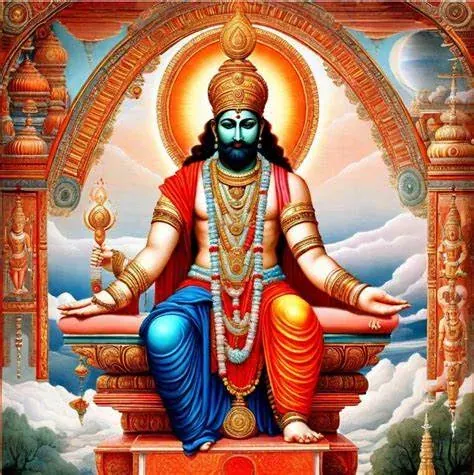
The traditional story describes a vast, formless being who arose and began to overwhelm the world, until the deities together pressed him to the earth, face down. Each deity settled on a part of his body, and he agreed to remain there as the guardian of the land, honoured whenever a structure is built.
Versions of the story vary between texts and regions, and it is most helpfully understood as symbolism. It expresses a simple idea: every space is alive with energy, and building thoughtfully — with respect for directions, elements and the centre — keeps that energy content and supportive. This is why a भूमि पूजन (Bhoomi Poojan, worship of the land) is traditionally performed before construction.
03
How is the Vastu Purusha positioned on a plot?
The Vastu Purusha is visualised lying on the plot with his head in the North-East, his feet in the South-West, and his arms and legs folded towards the South-East and North-West. This orientation explains several core Vastu principles.
Because the head rests in ईशान्य (Ishanya, the North-East), this corner is kept light, clean and sacred — ideal for the pooja room and open space. Because the feet and body weight rest in the South-West, this zone is suited to heavy furniture, the master bedroom and stability. The navel lies at the centre, the ब्रह्मस्थान (Brahmasthan), which is kept open and uncluttered.
04
What are the grids used in the mandala?
The mandala is drawn as a square divided into equal smaller squares, and different grid sizes are used for different purposes. Classical texts such as the Mayamatam and Manasara describe many variations.
Two are most commonly discussed today: an 8 × 8 grid of 64 squares, traditionally associated with temples and sacred spaces, and a 9 × 9 grid of 81 squares, widely used for homes and other buildings. In both, the central squares form the Brahmasthan, surrounded by rings of padas assigned to deities, with the outer ring holding the guardians of the boundary. Modern consultants often simplify the grid into 16 directional zones when working with apartments.
05
Which deities and elements rule the eight directions?
Each of the eight directions in the mandala is ruled by a guardian deity and linked with qualities that guide how the space is used.
01
North — Kubera
Wealth, opportunity and career; associated with the Water element's flow.
02
North-East — Isha
Clarity, wisdom and spirituality; the Water element. Ideal for prayer and meditation.
03
East — Indra and Surya
Health, vitality, social connection and recognition.
04
South-East — Agni
The Fire element; ideal for the kitchen and electrical equipment.
05
South — Yama
Discipline, strength and rest; suited to bedrooms and solid walls.
06
South-West — Nairutya
The Earth element; stability, relationships and the master bedroom.
07
West — Varuna
Gains, fulfilment and the fruits of effort; suited to the dining area or children's rooms.
08
North-West — Vayu
The Air element; movement, support and social ties; suited to guest rooms and storage of goods that move.
06
Why is the Brahmasthan so important?
The Brahmasthan is important because it is the energetic heart of the mandala, where the Space element resides and from which energy radiates to every zone. Traditionally it is kept open, light and free of heavy structures, pillars, toilets and clutter.
In a Mumbai flat, the centre often falls in a passage or living room. You can honour it simply by keeping that area uncluttered, well lit and free of heavy furniture, and by avoiding storage of junk or shoes there.
07
How is the mandala applied to a modern flat?
The mandala is applied to a modern flat by overlaying the grid onto an accurate floor plan aligned to true compass directions. The consultant first finds the centre of the flat, marks the directions with a compass reading, and then divides the plan into zones.
Real flats are rarely perfect squares. Cut corners, extensions, balconies and tilted buildings all affect how the grid falls. Each zone is then read for what it contains — a toilet, a kitchen, an entrance — and where there is an imbalance, remedies such as crystals, pyramids, colour, metal strips and salt therapy can restore harmony without demolition.
08
Why does the mandala still matter today?
The mandala still matters because it gives a clear, consistent logic for arranging any space, whether it is a bungalow, a high-rise flat or an office floor. Rather than a list of isolated rules, it shows how every zone relates to the whole.
Understanding it helps you see why certain guidelines exist — why the kitchen suits the South-East, why the North-East is kept light, why the centre stays open. That understanding makes it easier to adapt Vastu sensibly to compact city homes, where not every room can sit in its ideal zone, and to choose balancing remedies instead of worrying about imperfections.
09
When to consult a Vastu expert
Consult a Vastu expert when you want the mandala mapped accurately onto your own home, office or plot, especially if the shape is irregular or the directions are tilted. Dr. Kimaya Parikh-Ambekar begins with a distant analysis of your floor plan, follows with an on-site compass measurement across Mumbai when needed, and prepares a personalised written report. She also travels for site visits elsewhere in India and abroad, arranged on the free first call.
Distant consultations using floor plans and photographs are also available for homes outside Mumbai. Remedies are always non-structural and practical.
Questions
Frequently asked
What is the meaning of Vastu Purusha?
Vastu Purusha means the spirit or cosmic being of a site or dwelling. In Vastu tradition he lies across every plot, and building in harmony with his body keeps the space balanced.
In which direction is the head of the Vastu Purusha?
The head of the Vastu Purusha is in the North-East. This is why the North-East is kept clean, light and suitable for prayer, and heavy structures are avoided there.
What is the difference between the 64 and 81 grid mandalas?
The 64-square (8 × 8) grid is traditionally associated with temples, while the 81-square (9 × 9) grid is widely used for homes and buildings. Both place the Brahmasthan at the centre.
Can the Vastu Purusha Mandala be applied to an irregular flat?
Yes, the mandala can be applied to an irregular flat by carefully finding its centre and mapping zones onto the actual shape. Cuts and extensions are then balanced with suitable remedies.
What should not be placed in the Brahmasthan?
Toilets, heavy furniture, pillars, staircases and clutter are traditionally avoided in the Brahmasthan. It is kept open and light so energy can flow to every part of the home.