




Vastu Shastra · 19 September 2026 · 6 min read
The 45 Devtas of the Vastu Mandala
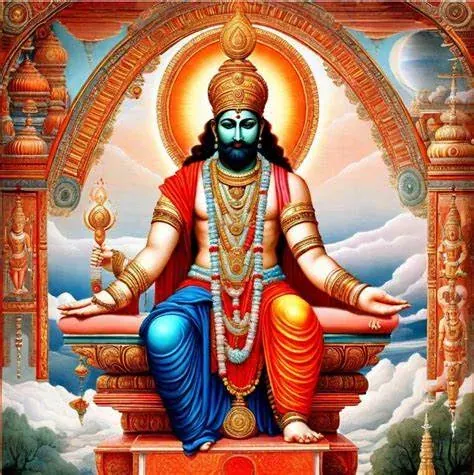
The Vastu Purusha Mandala is divided among 45 devtas, each governing a part of your home. Here is a clear, practical introduction to the 45 devtas in Vastu and why they still matter for Mumbai flats.
By Dr. Kimaya Parikh-Ambekar, Vastu consultant, Andheri East, Mumbai
01
What are the 45 devtas of the Vastu Mandala?
The 45 devtas are the deities assigned to different squares of the वास्तु पुरुष मंडल (Vastu Purusha Mandala), the sacred grid that underlies Vastu Shastra. Each devta governs a portion of the plot or home and gives that portion its character.
Rather than a list to memorise, the devtas are most easily understood as a map of qualities. Some zones are associated with wealth, some with health, some with rest and some with release. When an activity is placed in a zone whose qualities match it, Vastu considers the home to be in balance.
02
What is the story of the Vastu Purusha?
The Vastu Purusha is described in tradition as a great being who was pressed to the earth by the devtas, who then settled on different parts of his body. He lies with his head in the North-East and his feet in the South-West.
In return for being held down, it is said he was promised worship whenever a building is constructed. This is one reason why Vastu Puja and भूमि पूजन (Bhoomi Pujan, worship of the land) are performed before construction, and why गृह प्रवेश (Griha Pravesh, the house-warming ceremony) honours the space before a family moves in. Versions of the story vary between texts and regions, but the central idea — that the space itself is alive and deserves respect — remains the same.
03
How is the Vastu Mandala divided among the devtas?
The mandala most commonly used for homes is a grid of 81 squares (9 × 9), known as the Paramashayika mandala. The 45 devtas are distributed across these squares in three broad layers.
01
The centre — Brahma
Brahma occupies the central nine squares, the ब्रह्मस्थान (Brahmasthan, the centre). This is why Vastu asks that the centre be kept open, light and free of heavy structures or toilets.
02
The inner ring — 12 devtas
Twelve devtas surround Brahma, such as Aryama in the East, Vivasvan in the South, Mitra in the West and Prithvidhara in the North. They connect the centre with the outer zones.
03
The outer border — 32 devtas
Thirty-two devtas line the perimeter, eight on each side. These outer squares are the padas used to judge the entrance of a home.
04
Which devtas rule the eight directions?
The eight directions are guarded by the Dikpalas, whose qualities shape the purpose of each zone. These are the most practical devtas to know for everyday Vastu.
01
North — Kubera
Wealth and opportunity; a good zone for cash lockers facing North.
02
North-East — Isha
Spirituality and clarity; the natural place for the pooja room.
03
East — Indra and Surya
Growth, health and social standing; welcomes morning light.
04
South-East — Agni
Fire and energy; the ideal zone for the kitchen.
05
South — Yama
Discipline and strength; suits heavier walls and storage.
06
South-West — Nairutya
Stability; the master bedroom belongs here.
07
West — Varuna
Gains and continuity; suitable for children's rooms and dining.
08
North-West — Vayu
Movement and air; suits guest rooms and an alternative kitchen.
05
How do the devtas help decide the main entrance?
The devtas help decide the main entrance because each side of the mandala is divided into eight padas, each ruled by a different outer devta. The same wall can have supportive and less supportive door positions depending on which pada the door falls in.
For example, on the East side the padas associated with Jayanta, Indra (Mahendra) and Surya are traditionally considered welcoming, while positions nearer the corners need more care. This is why a Vastu consultant checks the entrance by compass pada rather than simply calling a door East-facing or South-facing. It is also why many South and West entrances in Mumbai turn out to be perfectly workable.
06
What do the devtas mean for a flat in Mumbai?
For a flat, the devtas mean that every room sits in a zone with a particular quality, even if the layout was designed without Vastu. The mandala is laid over your floor plan using compass readings, and each room's use is compared with the devta of that zone.
Most flats have a few mismatches. A toilet may fall in the North-East, or a bedroom may sit in the South-East. Vastu does not treat this as a disaster. Instead, it looks for ways to support the devta of that zone — through colour, metal, crystals, pyramids or a change in how the room is used.
07
How can you honour the devtas in daily life?
You can honour the devtas through simple habits of care rather than elaborate rituals. Vastu sees a clean, well-kept home as a form of respect for the whole mandala.
01
Keep the centre open
Clear the Brahmasthan of clutter and heavy furniture.
02
Light a diya in the North-East
A daily lamp or incense in the pooja area honours Isha.
03
Keep the entrance clean
Sweep the threshold, fix broken name plates and use a torana or rangoli on festivals.
04
Repair promptly
Fix leaks, cracks and broken fittings, as they are seen as disturbances in the mandala.
08
When to consult a Vastu expert
Consult a Vastu expert if you would like the mandala mapped accurately onto your home or plot. Doing this by eye is difficult, because the grid must be aligned to true compass readings and adjusted for irregular shapes.
Dr. Kimaya Parikh-Ambekar maps your floor plan zone by zone, explains which devtas govern each room, and suggests non-structural remedies. Consultations are available at the Andheri East office, on-site across Mumbai, or at a distance using your floor plan and photographs.
Questions
Frequently asked
Who sits at the centre of the Vastu Purusha Mandala?
Brahma sits at the centre of the Vastu Purusha Mandala. This central zone, the Brahmasthan, should be kept open and free of toilets, heavy furniture and clutter.
How many devtas are on the outer ring of the Vastu Mandala?
The outer ring has 32 devtas, eight on each side. Their squares, called padas, are used to judge the placement of the main entrance.
In which direction is the head of the Vastu Purusha?
The Vastu Purusha's head lies in the North-East and his feet in the South-West. This is why the North-East is kept light and clean, and the South-West heavier.
Why do Vastu consultants talk about padas?
Padas are the squares along each side of the mandala, each ruled by a devta. They allow a consultant to judge a door's position precisely, not just its general direction.
Do I need to worship all 45 devtas?
No, daily worship of all 45 devtas is not expected. A Vastu Puja at construction or Griha Pravesh, along with a clean, well-kept home, is the traditional way to honour them.
Want this applied to your own home or office?
Book free consultation