







Health & Wellbeing · 19 September 2026 · 5 min read
Self-Care Rituals at Home Inspired by Indian Traditions
Gentle, everyday self-care rituals from Indian traditions, from morning sunlight and oil massage to lighting a diya and quiet evening gratitude, for busy homes.
By Dr. Kimaya Parikh-Ambekar, Vastu consultant, Andheri East, Mumbai

01
What are self-care rituals in Indian tradition?
Self-care rituals in Indian tradition are small, repeated daily acts that care for the body, mind and home together. Long before self-care became a word on social media, Indian households had routines such as waking with the sun, oiling hair, lighting a lamp at dusk and eating simple, seasonal food.
What makes these rituals meaningful is not perfection but रोज़ (roz, daily) repetition with attention. A few mindful minutes, done regularly, can bring a sense of शांति (shanti, peace) to a busy day.
02
How can you begin the morning with a simple ritual?
Begin the morning by stepping into sunlight for a few minutes, ideally facing East. In Vastu the East belongs to Surya and Indra, and morning light is linked with energy and clarity.
You do not need to adopt every ritual at once. Choose one morning practice and one evening practice, repeat them for a few weeks, and let them become part of your natural routine. Rituals feel most nourishing when they fit your life, your beliefs and your home rather than becoming another item on a to-do list.
01
Drink water first
A glass of plain or lukewarm water before tea or coffee is a simple start.
02
Open the windows
Let fresh air and light into the home, especially the North and East.
03
Offer water to Tulsi
If you keep a Tulsi plant, watering it can become a quiet moment of care.
04
Set one intention
Before picking up your phone, decide one thing you want to feel or do today.
03
Why is oil massage part of Indian self-care?
Oil massage is part of Indian self-care because it is a slow, grounding way to reconnect with the body. The Ayurvedic tradition of अभ्यंग (abhyanga, self-massage with warm oil) is still practised in many families, especially before a bath.
Warm a little sesame or coconut oil, massage the scalp, shoulders, arms and feet with gentle strokes, rest for a few minutes and then bathe. If you have a skin condition or allergy, or are pregnant, check with your doctor about which oil is suitable.
04
How does lighting a diya bring calm to the home?
Lighting a diya brings calm because it marks a pause: a moment to stop, breathe and turn attention inward. Many homes light a ghee or oil lamp in the pooja area at dawn and dusk.
In Vastu, the pooja corner is ideally in the North-East, the zone of Isha. Keep it clean and simple. You might recite a short, familiar line such as ॐ शान्तिः शान्तिः शान्तिः (Om Shanti Shanti Shanti, peace, peace, peace) or simply sit in silence for a minute. Never leave a lamp or incense burning unattended, especially around children or curtains.
05
What are simple breathing and stillness practices to try?
Simple breathing and stillness practices include slow belly breathing, humming breath and a few minutes of sitting quietly. These can be done anywhere, even in a small flat.
Choose a regular time for these practices, such as right after your bath or just before dinner, so they attach to something you already do every day.
01
Slow breathing
Breathe in gently through the nose for a count of four and out for a count of six, for a few rounds.
02
Humming breath
Inhale, then exhale while humming softly; many people find the sound soothing.
03
Five quiet minutes
Sit facing East or North, close your eyes and simply notice your breath.
04
Mindful chai
Drink one cup of tea without a screen, noticing its warmth and taste.
06
What evening rituals help you unwind?
Evening rituals that help you unwind include a warm salt-water foot soak, dimming lights, a light dinner and a few lines of gratitude. Salt has long been used in Indian homes for cleansing, and a foot soak is a gentle way to mark the end of the day.
Before bed, put away screens for a while, tidy one small area so you wake to order, and note three things you are grateful for. Sleep with your head towards the South or East, as Vastu suggests, in a room that is calm and uncluttered.
07
Can self-care rituals replace therapy or medical treatment?
No, self-care rituals cannot replace therapy or medical treatment. They can make daily life feel gentler and support your wellbeing, but ongoing low mood, anxiety, sleep problems or physical symptoms deserve proper professional care.
Please continue any treatment you are receiving and talk to your doctor or therapist about what else might help. If you are struggling, please reach out to a mental-health professional. In India you can call the free Tele-MANAS helpline on 14416 (or 1-800-891-4416), available 24×7.
08
When to book a Reiki session
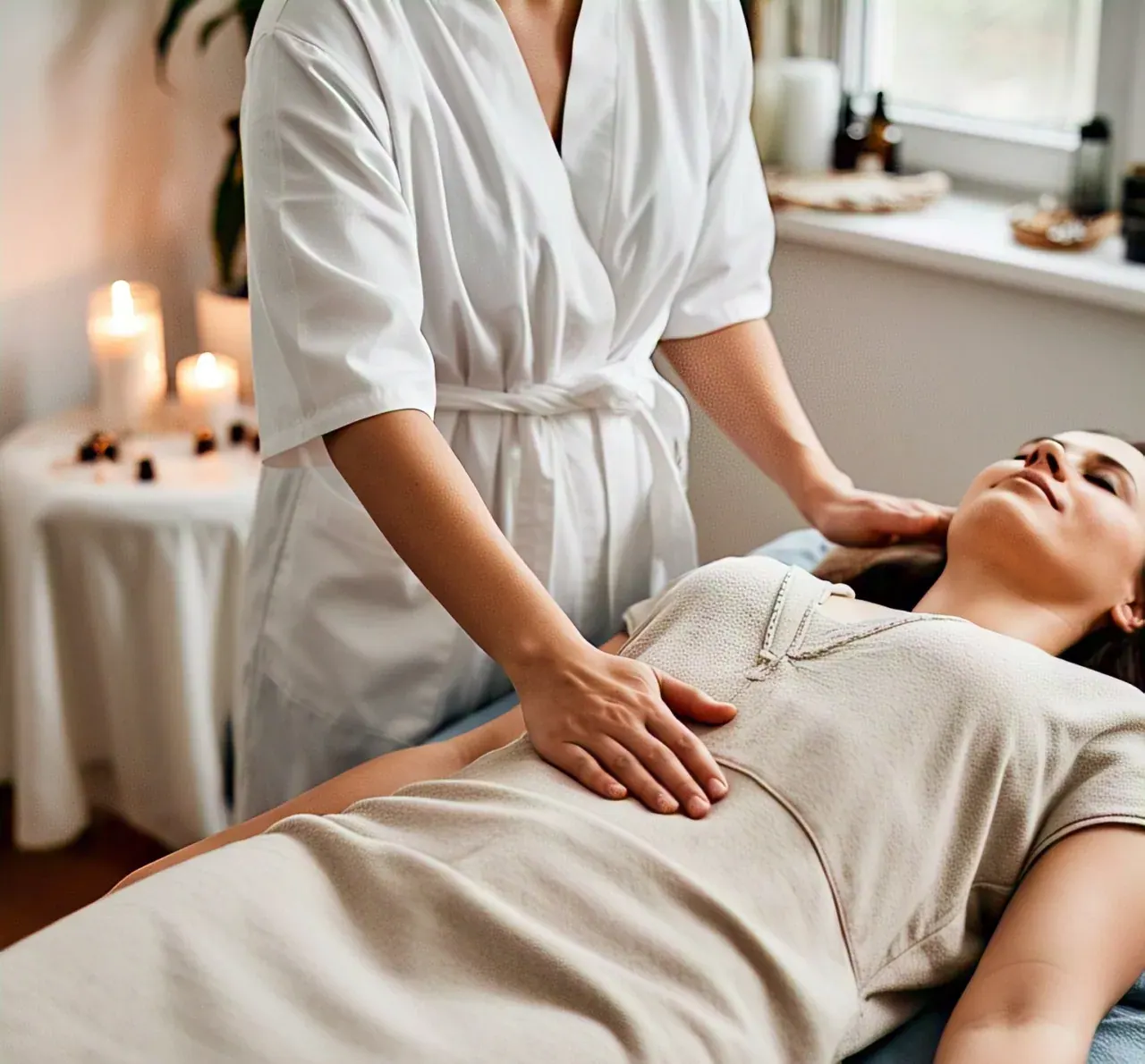
Consider a Reiki session if you would like a guided, restful space to relax alongside your own home rituals, or if your home itself feels heavy and you want to combine personal care with space healing.
Dr. Kimaya Parikh-Ambekar offers Reiki healing and Reiki Vastu at VastuKimaya's office in Andheri East, on-site across Mumbai, and as distance Reiki. Sessions are complementary and are always offered alongside, never instead of, medical and psychological care.
Questions
Frequently asked
What is the simplest Indian self-care ritual to start with?
The simplest ritual is a few minutes of morning sunlight facing East with a glass of water, before you check your phone.
Is oil massage safe for everyone?
Gentle oil massage is suitable for many people, but anyone with skin conditions, allergies, pregnancy or medical concerns should check with a doctor first.
Do I need a pooja room for a diya ritual?
No. A clean shelf or small corner, ideally in the North-East, is enough for a diya. Always keep a flame supervised.
Can self-care rituals help with stress?
Many people find simple rituals relaxing during stressful periods. If stress feels overwhelming or lasts, please speak to a doctor or mental-health professional.
How long should a daily self-care ritual take?
Even ten to fifteen minutes a day is enough. Consistency matters more than length.
Want this applied to your own home or office?
Book free consultation