







Festivals & Rituals · 19 September 2026 · 5 min read
Navratri at Home: Vastu for Ghatasthapana and Pooja
Celebrating Navratri at home? Navratri Vastu for Ghatasthapana: where to place the kalash and Devi's image, which way to face, the akhand jyoti and keeping the home sacred for nine days.
By Dr. Kimaya Parikh-Ambekar, Vastu consultant, Andheri East, Mumbai
02
Where should the Ghatasthapana kalash be placed?
The Ghatasthapana kalash is ideally placed in the North-East of the home or of the pooja area, the ईशान्य (Ishanya) zone, linked with the Water element, purity and divine energy. The North or East are good alternatives when the North-East is not usable.
Place the kalash on a clean, raised platform such as a wooden chowki covered with a red or yellow cloth. Many families sow barley or other grains in a clay pot of soil beside or beneath the kalash, symbolising growth and prosperity; keep this watered gently through the nine days.
Avoid placing the kalash in a bedroom, near a toilet wall, under a staircase or directly under a heavy beam. Follow your family's tradition for the specific items placed in and on the kalash.
03
Where should the image or idol of Devi be placed?
The image or idol of Goddess Durga is placed in the North-East, North or East, on a raised platform beside or behind the kalash. The Devi is usually placed facing West or East, so that the family can face East or North while praying.
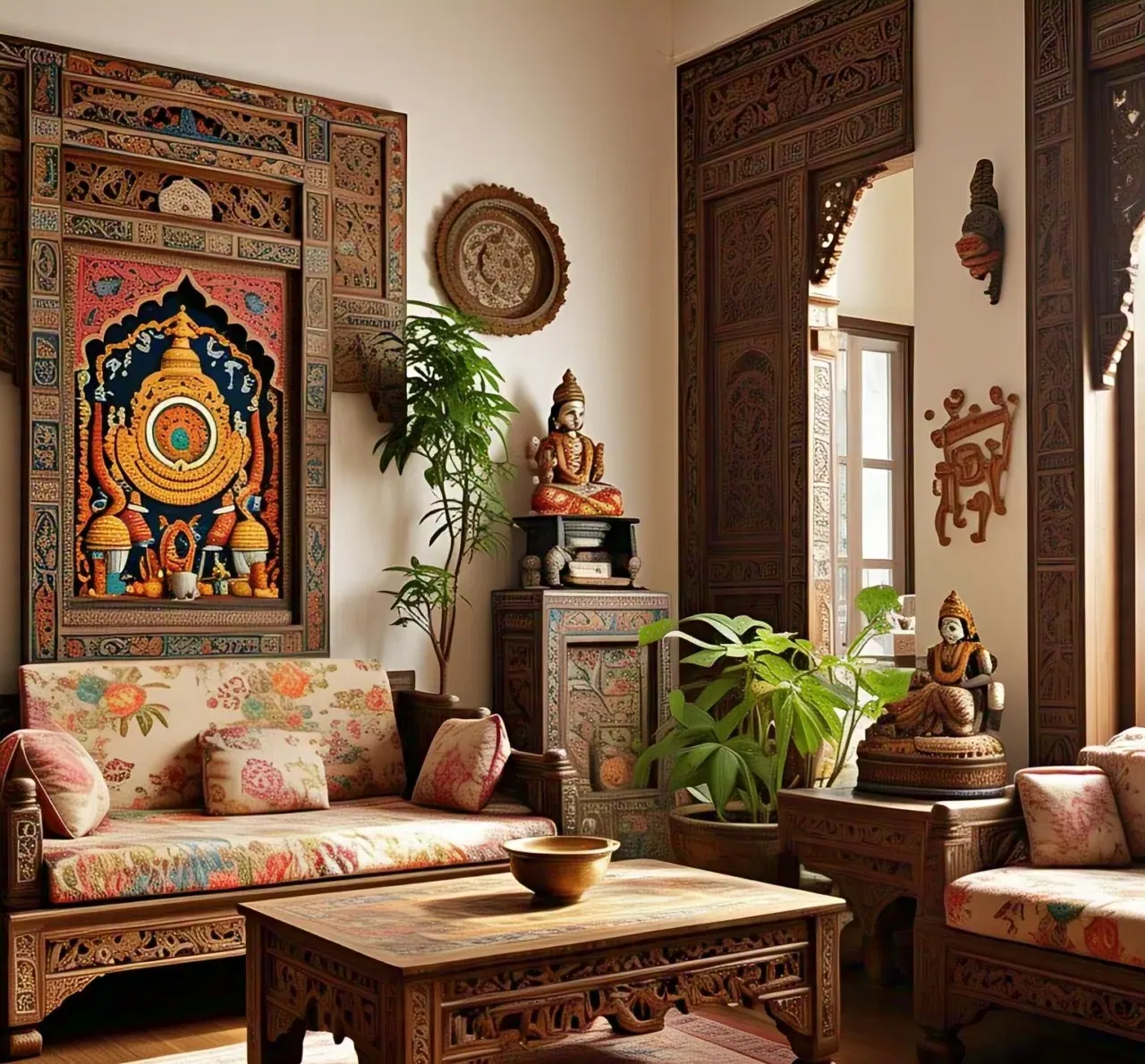
Keep the image at a respectful height, clean and well lit, with fresh flowers each day. If you already have a home mandir in the North-East, the Navratri setup can be arranged in front of or beside it, rather than creating a second, competing space.
Many families also use a small image of Goddess Durga on a lion, or a yantra, according to their tradition.
04
Where should the akhand jyoti be kept?
The akhand jyoti, the lamp kept burning through Navratri, can be placed on the South-East side of the pooja setup, the zone of अग्नि (Agni, fire). This aligns the flame with its natural element.
Safety comes first, especially in compact Mumbai homes. Use a covered lamp or a glass chimney, keep it on a stable, non-flammable surface, away from curtains, flowers and paper decorations, and never leave children or pets alone near it. Keep enough oil or ghee ready and check the lamp regularly.
If keeping a lamp burning continuously is not safe in your home, lighting a diya morning and evening with sincere devotion is a respectful alternative.
08
When to consult a Vastu expert
Consult a Vastu expert if you are unsure where the North-East falls in your home, if the natural spot is a bedroom or bathroom, or if you would like a permanent pooja space that suits festivals throughout the year. A compass-based reading of your floor plan makes these decisions simple.
Dr. Kimaya Parikh-Ambekar offers on-site consultations across Mumbai from the Andheri East office and distant consultations using floor plans and photographs, with practical, non-structural guidance for homes of every size.
Questions
Frequently asked
Which direction should the kalash be placed for Navratri?
The kalash is ideally placed in the North-East of the home or pooja area, with the North or East as alternatives. Place it on a clean, raised platform.
Which direction should I face during Navratri pooja?
Face East or North during Navratri pooja, as Vastu associates these directions with clarity and positive energy. Arrange the Devi's image so this is comfortable.
Where should the akhand jyoti be placed?
The akhand jyoti can be placed on the South-East side of the pooja setup, the zone of Agni. Keep it covered, stable and away from anything flammable.
Can Navratri pooja be done in a small flat?
Yes, Navratri pooja can be done beautifully in a small flat. Choose a clean North-East, North or East spot in the living room, and keep the setup simple and safe.
Can the Navratri setup be placed in the bedroom?
The bedroom is generally avoided for the Navratri setup. The living room or an existing pooja area is more suitable for daily worship and family gatherings.
Want this applied to your own home or office?
Book free consultation