






Vastu Tips · 19 September 2026 · 5 min read
Vastu for Joint Families in Mumbai Homes
Three generations under one roof in a Mumbai flat? Practical joint family Vastu for bedrooms, the kitchen, shared spaces and harmony, with simple non-structural remedies.
By Dr. Kimaya Parikh-Ambekar, Vastu consultant, Andheri East, Mumbai
01
How does Vastu support a joint family?
Vastu supports a joint family by giving each generation a place that suits its role, while keeping shared spaces open, warm and easy to gather in. When everyone feels settled in their own corner and welcome in the common areas, daily life flows more smoothly.
The idea of the कुटुंब (kutumb, the extended family) runs deep in Indian homes. In Mumbai, joint families often live in 2BHK or 3BHK flats, sometimes across two adjoining units, where space is precious and privacy is limited. That makes thoughtful placement even more valuable.
Vastu cannot resolve every family disagreement, and it does not replace open conversation. What it can do is reduce the everyday friction that comes from a cramped, cluttered or poorly arranged home.
02
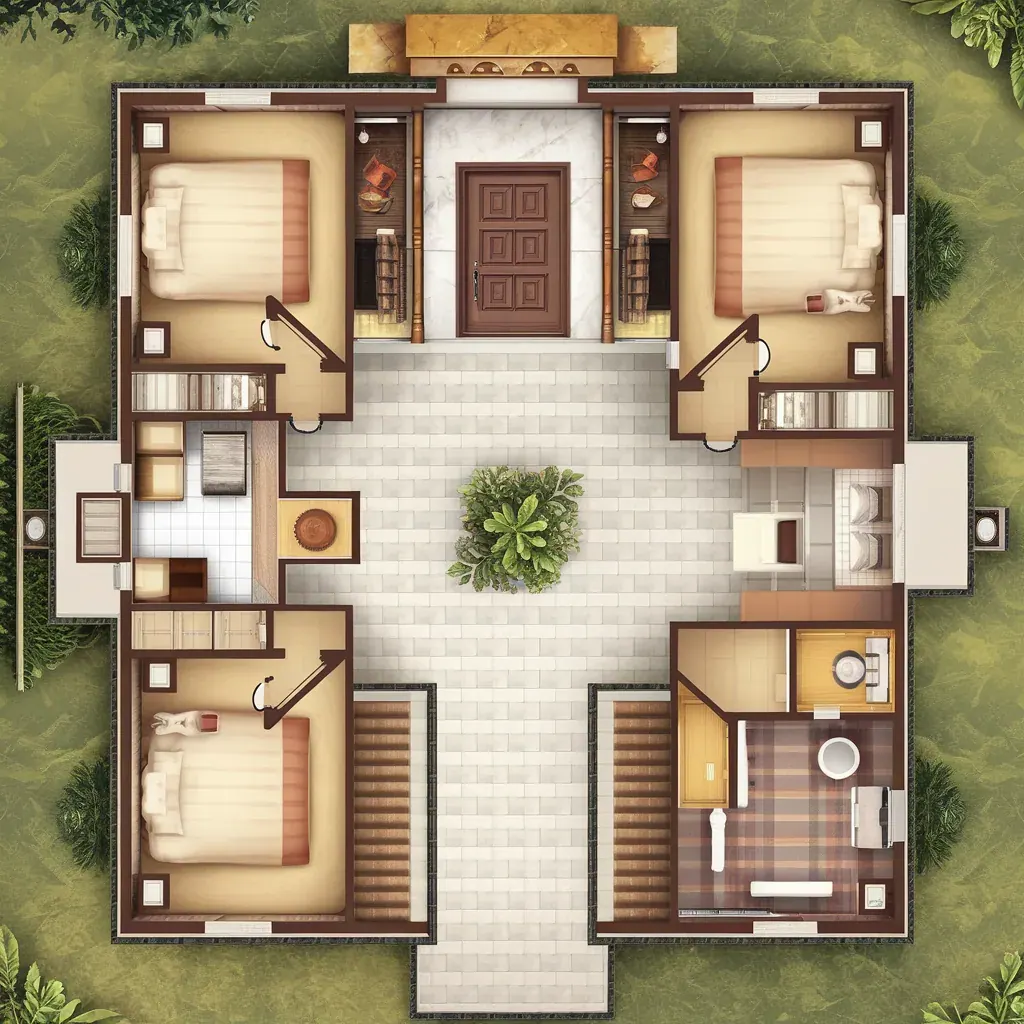
Who should use which bedroom in a joint family?
The South-West bedroom traditionally belongs to the head of the family, usually the eldest couple or the main earning member. The South-West is the zone of the Earth element, associated with stability, authority and grounding.
01
Eldest couple or head of the family
South-West bedroom, for stability and a sense of respect and security.
02
Younger married couple
South or West bedroom. If the younger couple now runs the household, a discussion about the South-West is worth having with care.
03
Children and teenagers
West or North-West room, with the study desk facing East or North.
04
Elderly parents who need easy access
A ground-floor or near-bathroom room in the South or West, with safety as the first consideration.
05
Guests or visiting relatives
North-West room, the zone of Vayu, linked with movement and short stays.
03
What if there are more people than bedrooms?
When there are more people than bedrooms, use the living room thoughtfully and create personal pockets of space within shared rooms. This is the reality for many Mumbai families, and small arrangements make a big difference.
A sofa-cum-bed in the South or West part of the living room works for a family member who sleeps there. Folding partitions, curtains or a tall bookshelf can create a sense of privacy without construction. Give each person some storage of their own, even if it is one cupboard shelf, so belongings do not spill into common areas.
Keep the centre of the living room, the ब्रह्मस्थान (Brahmasthan), free for walking and gathering rather than using it for beds or storage.
04
How should the kitchen and dining area work for a large family?
The kitchen suits the South-East, the zone of Agni, with the cook facing East, and the North-West is an acceptable alternative. In joint families, the kitchen is often the busiest room, so order and ventilation matter as much as direction.
01
One shared rhythm
Agree on simple routines for cooking and cleaning so the kitchen does not become a point of tension.
02
Stove and sink apart
Keep Fire and Water elements separated where possible; a small gap or a green element between them helps.
03
Dining together
The West part of the home suits the dining area. A table where the family eats together at least once a day strengthens connection.
04
Storage in the South-West
Heavy grains and bulk supplies are better stored in the South or West of the kitchen.
06
Simple remedies for harmony at home
Simple, non-structural remedies can support a calmer atmosphere in a busy joint family home.
01
Declutter regularly
More people usually means more belongings. A monthly family clear-out keeps energy from stagnating.
02
Strengthen the South-West
Keep it stable, with solid furniture and earthy colours; a pair of Rose Quartz is often used here for relationship harmony.
03
Salt and sound
A bowl of sea salt in a heavy corner, replaced regularly, and the sound of a bell during aarti help keep the space feeling light.
04
Fix what is broken
Leaking taps, stuck doors and broken fittings quietly add to irritation in a crowded home.
05
Give everyone a voice
A well-arranged home supports good communication, but cannot replace it. Regular family conversations matter as much as any remedy.
07
When to consult a Vastu expert
Consult a Vastu expert when a joint family is moving into a new home, combining two flats, redeveloping, or when tension seems to centre on particular rooms. A professional assessment helps decide room allocation fairly and objectively, which can itself ease difficult conversations.
Dr. Kimaya Parikh-Ambekar offers on-site consultations across Mumbai from the Andheri East office and distant consultations using floor plans and photographs. Her remedies are non-structural, so they suit families living in society flats and rented homes.
Where family conflict is ongoing or distressing, a family counsellor can also help. Vastu is most helpful as one part of that support.
Questions
Frequently asked
Which bedroom should parents use in a joint family?
The eldest parents or head of the family traditionally use the South-West bedroom, as it is linked with stability and authority. Other couples can use the South or West bedrooms.
Where should a married son and daughter-in-law sleep as per Vastu?
A married son and daughter-in-law usually use a South or West bedroom when the parents occupy the South-West. Privacy and comfort for the couple are important for family harmony.
Can two families share one kitchen as per Vastu?
Yes, two families can share one kitchen. Keep it in the South-East or North-West, well organised and ventilated, and agree on shared routines to avoid friction.
Which direction should the family photo be placed?
Family photographs are commonly placed on the South-West wall of the living room, which is associated with stability and relationships. Choose happy, recent pictures.
Can Vastu reduce arguments in a joint family?
Vastu can make a home feel calmer and less cramped, which may ease everyday friction. It works alongside open communication and, where needed, support from a family counsellor.
Want this applied to your own home or office?
Book free consultation