






Vastu Shastra · 19 September 2026 · 5 min read
Vastu Dosha: Signs, Causes and Types
What is a Vastu dosha, what causes it, and what are the main types? A calm, fear-free guide to recognising imbalances at home and the non-structural ways to correct them.
By Dr. Kimaya Parikh-Ambekar, Vastu consultant, Andheri East, Mumbai

01
What is a Vastu dosha?
A Vastu dosha is an imbalance in a home or workplace that arises when a space or object is placed in a direction that does not suit its nature. The Sanskrit word दोष (dosha) simply means a defect or fault.
Almost every home has some doshas, especially compact flats designed around building constraints rather than directions. Finding one is not a reason for worry. It is simply information that helps you bring the space into better balance.
Vastu sees each direction as linked with a deity and an element. When a heavy, fiery or watery feature sits in a zone meant for something else, the harmony of the पंचतत्व (Pancha Tattva, the five elements) is disturbed.
02
What are the common signs of a Vastu dosha?
Common signs of a Vastu dosha are a persistent feeling that a space is heavy, restless or stuck, even when it is clean and comfortable. These signs are gentle indicators, not proof, and many everyday difficulties have ordinary causes that deserve attention first.
01
A room nobody likes to use
A corner that collects clutter or feels uninviting no matter how it is arranged.
02
Restless sleep in one room
Discomfort that seems linked to a particular bedroom or bed position.
03
Frequent small breakdowns
Recurring leaks, electrical faults or damp patches in one zone.
04
Friction in the household
Repeated misunderstandings that feel tied to how the home is used.
05
Stalled plans
A sense that work or finances keep meeting obstacles despite effort.
03
What causes Vastu doshas?
Vastu doshas are usually caused by building design, later renovations or everyday use of space. Most are nobody's fault; they come from builders' layouts, shared walls and the realities of city living.
01
Builder layouts
Toilets, kitchens and entrances placed for plumbing and space efficiency rather than direction.
02
Renovations
Merging rooms, moving a kitchen or enclosing a balcony can shift zones.
03
Placement of objects
Heavy cupboards in the North-East, a water tank in the South-East, or clutter in the centre.
04
Surroundings
Poles, towers, tall buildings or roads pressing on the entrance.
04
What are the main types of Vastu dosha?
The main types of Vastu dosha can be grouped by what is out of balance. Consultants may use different names, but these categories cover most situations.
01
Entrance (dwar) dosha
A main door in an unfavourable pada, facing a staircase, lift or toilet, or blocked by an obstruction.
02
Directional dosha
A room in an unsuitable zone, such as a toilet in the North-East or a bedroom in the South-East.
03
Elemental dosha
Clashing elements, such as a stove beside a sink or a water feature in the South-East fire zone.
04
Brahmasthan dosha
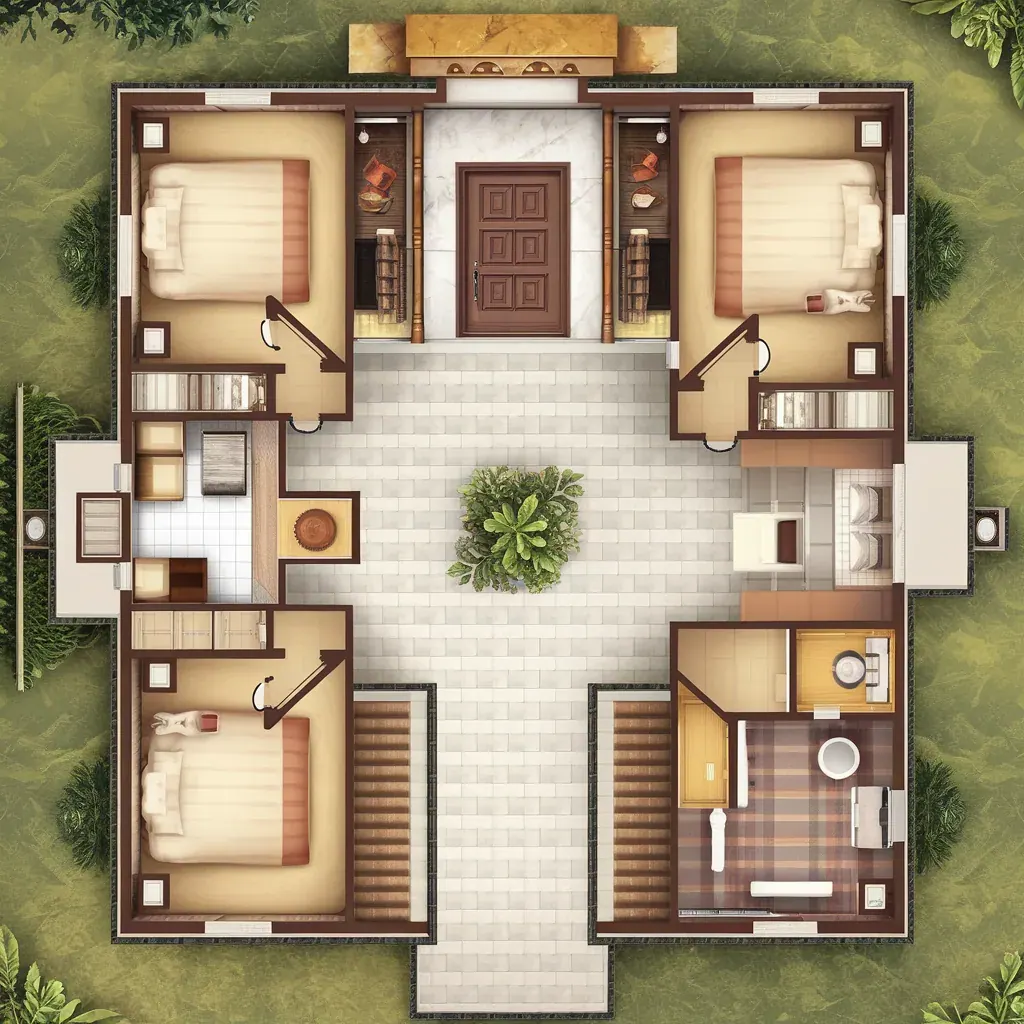
A toilet, pillar, staircase or heavy furniture in the ब्रह्मस्थान (Brahmasthan, the centre).
05
Shape dosha
A cut, missing or extended corner that makes the plan irregular.
06
Surroundings dosha
Features outside the home, such as a T-junction road or a large structure directly in front.
05
Which doshas are considered more significant?
Doshas involving the North-East, the centre, the South-West and the main entrance are generally given the most attention. These zones carry clarity, balance, stability and incoming energy, so imbalances there are addressed first.
Even so, every direction has strengths and every dosha has remedies. A toilet in the North-East, for example, is a common situation in city flats and is usually balanced without demolition.
06
How are Vastu doshas corrected without demolition?
Vastu doshas are commonly corrected with non-structural remedies that rebalance energy without breaking walls. This makes them suitable for rented homes, society flats and working offices.
01
Pyramid therapy
Activated pyramids placed in affected zones to support correction.
02
Metal strips and helix
Copper, brass or other metals used to separate or balance clashing zones.
03
Crystal therapy
Crystals chosen for the element and direction involved.
04
Colour therapy
Wall, fabric and décor colours adjusted to suit each zone.
05
Salt and space cleansing
Sea salt, sound and Reiki to refresh heavy or stagnant areas.
06
Rearrangement
Moving beds, desks, lockers and heavy furniture to more suitable zones.
07
What can you check at home today?
You can check for obvious doshas today with a compass, a floor plan and a calm eye. Mark the eight directions from the centre of your home and note what sits in the North-East, the centre and the South-West.
Clear clutter from the North-East and the centre, move heavy items towards the South and West where you can, and make sure the entrance is clean and bright. These simple steps are helpful whatever else you decide.
08
When to consult a Vastu expert
Consult a Vastu expert when you want an accurate picture of the doshas in your home and which ones matter most. Precise compass measurement, pada analysis and experience help avoid unnecessary worry or changes.
Dr. Kimaya Parikh-Ambekar of VastuKimaya identifies doshas through distant analysis and on-site measurement across Mumbai from her Andheri East office, then provides a personalised written report with non-structural remedies and follow-up.
Questions
Frequently asked
How do I know if my house has Vastu dosh?
You can spot possible Vastu doshas by checking what sits in the North-East, centre, South-West and entrance of your home. An expert assessment with a compass gives a more reliable picture.
Can Vastu dosh be removed without demolition?
Yes, most Vastu doshas can be balanced without demolition. Pyramids, metal strips, crystals, colour, rearrangement and space cleansing are commonly used non-structural remedies.
Is a toilet in the North-East a serious Vastu dosha?
A toilet in the North-East is considered a significant dosha, but it is common in flats and can be balanced with remedies. Keep it clean, closed, well ventilated and apply the corrections advised.
Do rented homes have Vastu dosh too?
Yes, rented homes can have Vastu doshas just like owned homes. Portable, non-structural remedies are well suited to rented flats because they can move with you.
What is Brahmasthan dosha?
Brahmasthan dosha arises when the centre of a home is blocked by a toilet, pillar, staircase, heavy furniture or clutter. Keeping the centre open, clean and light is the first step to balance it.
Want this applied to your own home or office?
Book free consultation