








Festivals & Rituals · 5 October 2026 · 6 min read
The Pooja Ghar Before Diwali: Cleaning and Arranging It
Where the mandir belongs, which way the images should face, what is traditionally cleared out of it, and the common arrangements in a Mumbai flat where there is no separate room.
By Dr. Kimaya Parikh-Ambekar, Vastu consultant, Andheri East, Mumbai
Read this in: हिन्दी
01
Where the pooja ghar belongs
The north-east is the traditional zone, and it is the most consistent piece of guidance in household Vastu. The east is the usual second choice. The space is raised off the floor rather than standing directly on tiles, and kept clean in a way the rest of the home is not expected to be.
What is avoided matters as much. A मंदिर (mandir, shrine) is not placed under a staircase, against a wall shared with a bathroom, directly beneath a toilet on the floor above, in a bedroom where there is any alternative, or in the storeroom.
02
Which way the images face
Images are usually placed facing west or south, so that the person praying faces east or north. East is the conventional direction for morning worship; north is associated with increase and is equally acceptable.
Two smaller conventions come up often. Images are not placed directly facing one another, and nothing is positioned so that its back is to the person praying. Where a niche makes this awkward, the direction the worshipper faces takes priority over everything else.
- Sit facing east or north; set the images west or south accordingly.
- Keep the images raised, on a platform or in a wall unit, not on the floor.
- Avoid placing two images directly facing each other.
- Keep a small gap between the images and the wall behind them.
- Keep the lamp to the south-east of the shrine where the layout allows.
03
What is cleared out before Diwali
This is the part that actually takes time, and most households do a version of it without calling it Vastu.
What is conventionally removed is anything broken, spent or no longer in use.
- Chipped or broken idols and frames. These are traditionally retired respectfully rather than kept.
- Dried flowers, old garlands and anything withered.
- Burnt-out wicks, spent incense stubs, and the ash that collects behind everything.
- Old calendars, photographs and printed images that have faded or torn.
- Anything stored in the shrine that does not belong there — documents, keys, medicine, cash.
04
Retiring something respectfully
Broken idols and spent materials are not simply put out with the household rubbish in most traditions, and this is the question people ask most often.
The common practice is immersion in flowing water, though in Mumbai that has become an environmental problem rather than a solution. The practical alternatives now are to return earthen items to soil — a garden, a large plant pot — or to hand them to a temple that accepts such items for proper disposal. Several Mumbai temples and societies organise collection before and after festivals. Paper and cloth can be given for respectful disposal in the same way.
Where none of that is available, wrapping the item in clean cloth before disposing of it is what most families settle on.
05
When there is no separate room
Most Mumbai flats have no pooja room, and none of the guidance above requires one.
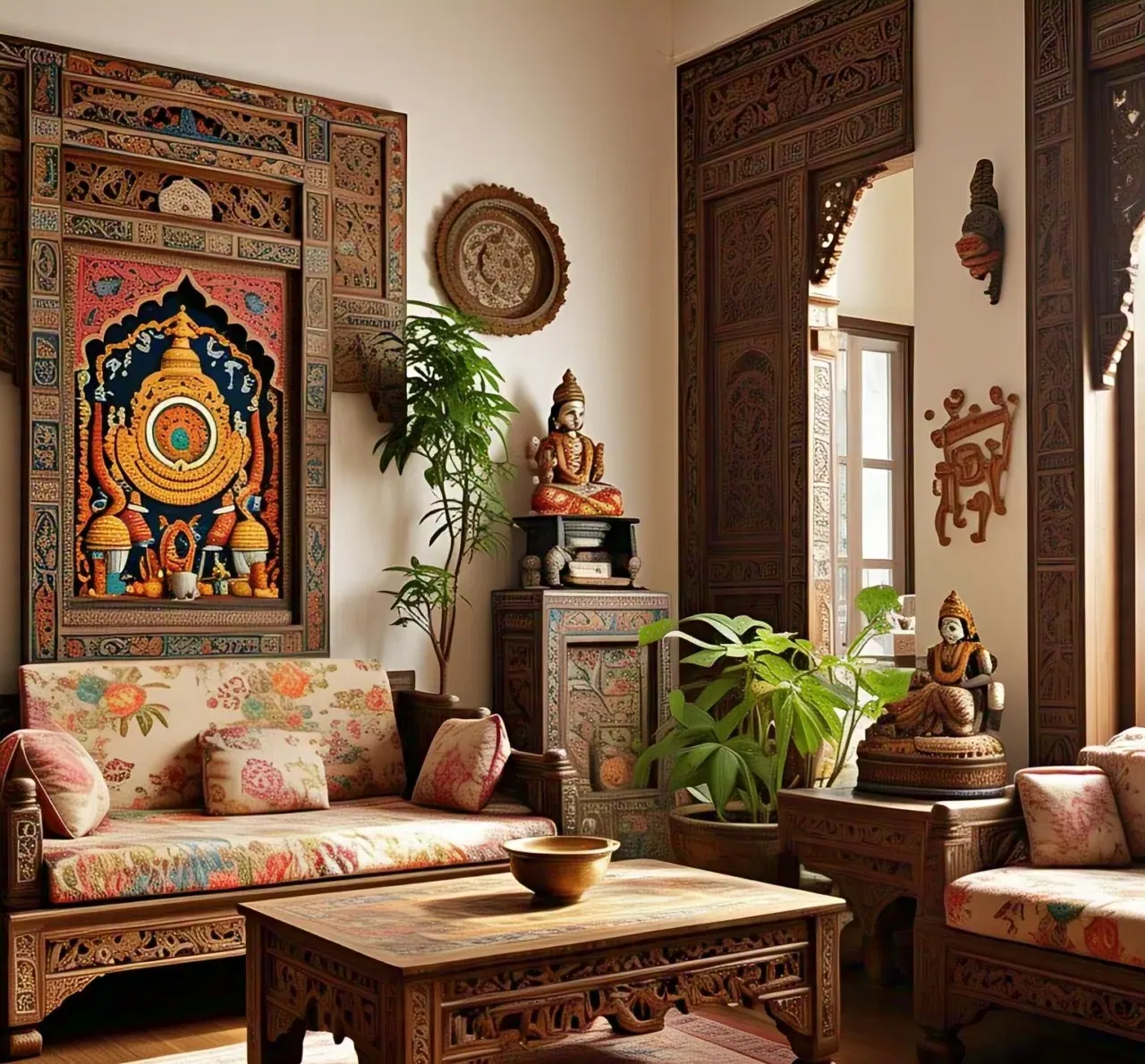
A wall unit, a shelf or a cabinet in the north-east of the living room works perfectly well. What matters is that it is raised, clean, not crossed by daily traffic, and not sharing a wall with a bathroom.
In a one-room flat where the shrine has to be in the bedroom, keep it in the north-east corner, screen it with a curtain or a shutter when the room is being used for sleeping, and do not place it at the foot of the bed.
06
Keeping it after the festival
The shrine is cleaned thoroughly before Diwali and then, in a great many homes, slowly becomes a shelf again — the place where keys, letters and small objects land because it is at eye level by the door.
If one habit is worth keeping from the preparation, it is that the pooja space holds only what belongs to it. That is a daily matter rather than an annual one, and it costs nothing.
Questions
Frequently asked
In which direction should the pooja ghar be placed?
The north-east of the home, with east as the usual second choice. Keep it raised off the floor and away from any wall shared with a bathroom.
Which way should idols face in a mandir?
Usually west or south, so that the person praying faces east or north. The direction the worshipper faces takes priority if the niche makes this awkward.
What should be done with broken idols?
They are traditionally retired respectfully rather than kept or binned. Earthen items can be returned to soil, and several Mumbai temples and societies collect such items for proper disposal — immersion in the sea is now an environmental problem rather than a solution.
Can a pooja space be kept in a bedroom?
It is better avoided where there is an alternative. In a one-room flat, use the north-east corner, screen it when the room is used for sleeping, and do not place it at the foot of the bed.
Can the mandir be placed under a staircase?
No. Under a staircase, against or below a bathroom, and in a storeroom are the placements consistently avoided.
Want this applied to your own home or office?
Book free first call