





Vastu Shastra · 19 September 2026 · 5 min read
The 16 Vastu Zones and What Each Governs
Vastu divides a home into 16 directional zones, each linked with an area of life. Here is what each of the 16 Vastu zones governs and how to use them in a flat.
By Dr. Kimaya Parikh-Ambekar, Vastu consultant, Andheri East, Mumbai

01
What are the 16 Vastu zones?
The 16 Vastu zones are the sixteen directional segments into which a floor plan is divided, each spanning 22.5 degrees of the compass. They are made up of the four cardinal directions (North, East, South, West), the four corners (North-East, South-East, South-West, North-West) and the eight directions in between, such as North-North-East and East-South-East.
Classical Vastu is often taught through eight directions and their deities, and through the वास्तु पुरुष मंडल (Vastu Purusha Mandala, the energy grid of a site). The 16-zone approach is a finer way of reading the same directions, widely used by many contemporary practitioners to place rooms, objects and remedies more precisely.
Think of it as moving from a map of eight neighbourhoods to a map of sixteen streets. The core principles stay the same; the detail improves.
The zone themes described below are the associations commonly used in 16-zone practice. Different schools phrase them a little differently, so treat them as guides to how a space is read rather than fixed rules.
02
How are the 16 zones marked on a floor plan?
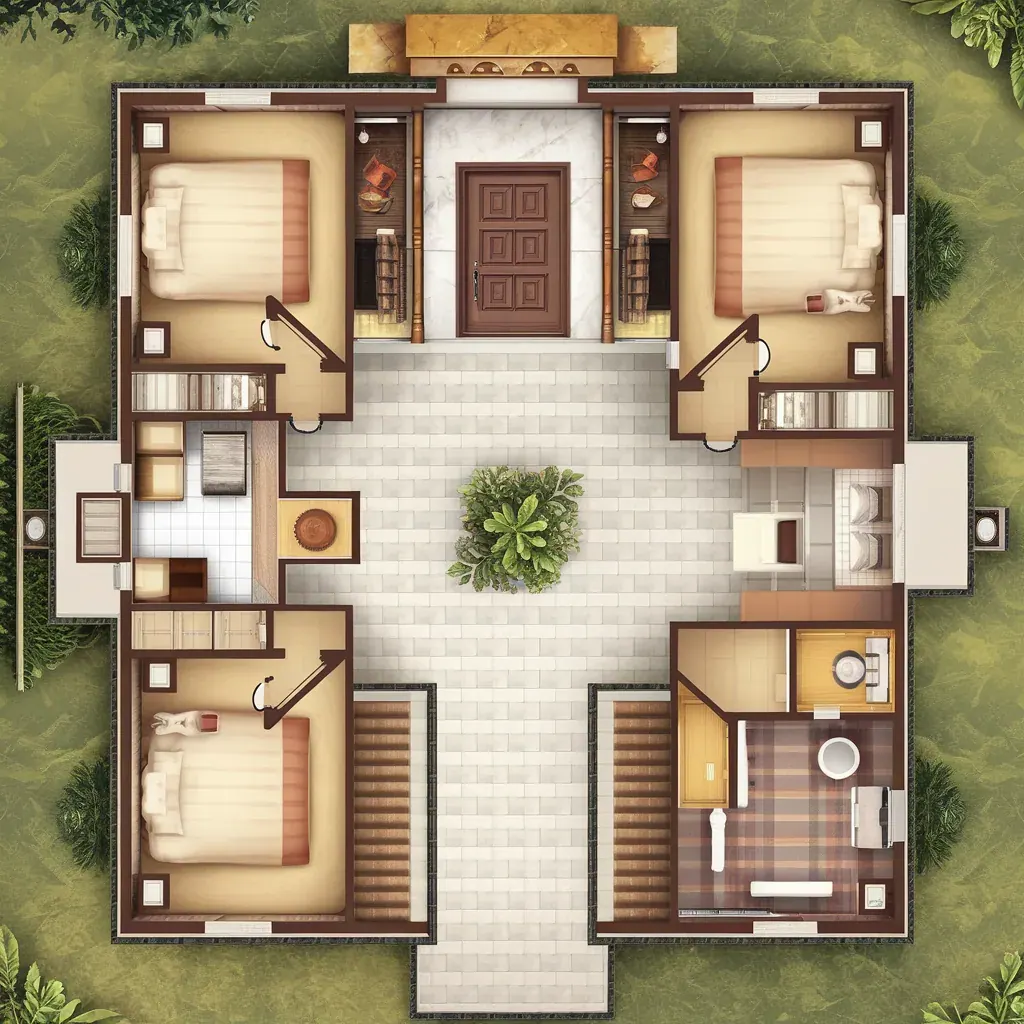
The 16 zones are marked by finding the centre of the floor plan, aligning it with true compass readings, and drawing lines outward every 22.5 degrees. Each wedge-shaped segment is one zone.
Accuracy matters. A small error in compass reading can shift a door or toilet from one zone into the next, especially in flats with irregular shapes, balconies and projections. Steel doors, grills and electrical panels can also disturb a phone compass, so readings are taken at several points in the home.
For odd-shaped flats, the centre, or ब्रह्मस्थान (Brahmasthan), is worked out carefully first, as every zone is measured from it.
Once the zones are drawn, each room, door, toilet, kitchen platform and major piece of furniture is noted against the zone it falls in. This map becomes the basis for deciding what is working well, what needs support, and which simple remedies suit each area.
03
What do the North-side zones govern?
The North-side zones are commonly associated with opportunities, finances and support. The North as a whole is ruled by Kubera, the guardian of wealth.
01
North-North-West (NNW)
Commonly associated with attraction, pleasure and intimacy.
02
North (N)
Associated with money, career opportunities and new openings. Kept clean and open.
03
North-North-East (NNE)
Associated with health, immunity and healing. Suits light, clutter-free use.
04
North-East (NE)
The zone of Isha and the Water element, linked with clarity, wisdom and spirituality. Ideal for the pooja room or meditation.
04
What do the East-side zones govern?
The East-side zones are commonly associated with vitality, social connection and energy. The East is ruled by Indra and Surya, the sun.
01
East-North-East (ENE)
Associated with fun, refreshment and recreation. Suits a family sitting area.
02
East (E)
Associated with social connections, recognition from others and vitality. Morning sunlight here is valued.
03
East-South-East (ESE)
Associated with churning thoughts and anxiety when disturbed; often suggested for activities like washing, and kept calm.
04
South-East (SE)
The zone of Agni and the Fire element, linked with energy, cash flow and digestion. The traditional kitchen zone.
05
What do the South-side zones govern?
The South-side zones are commonly associated with confidence, reputation, rest and stability. The South is ruled by Yama.
01
South-South-East (SSE)
Associated with strength, confidence and courage.
02
South (S)
Associated with fame, reputation, relaxation and restful sleep.
03
South-South-West (SSW)
Associated with letting go and disposal; often considered suitable for toilets or a dustbin.
04
South-West (SW)
The zone of Nairutya and the Earth element, linked with stability, relationships and skills. The master bedroom zone.
06
What do the West-side zones govern?
The West-side zones are commonly associated with education, gains, emotional release and support. The West is ruled by Varuna and the North-West by Vayu.
01
West-South-West (WSW)
Associated with education, study and savings.
02
West (W)
Associated with gains, profits and the results of effort.
03
West-North-West (WNW)
Associated with releasing negative emotions and detoxification; often suitable for a toilet.
04
North-West (NW)
The zone of Vayu and the Air element, linked with support from others, movement and banking. Suits a guest room or storage of goods for sale.
07
How can you use the 16 zones in a Mumbai flat?
You can use the 16 zones in a Mumbai flat mainly through placement, colour and simple remedies rather than construction. Once you know which zone each room and corner falls in, small adjustments become far more targeted.
For example, a student's desk can be moved into the West-South-West part of a room for study, a family photo placed in the South-West, a dustbin shifted from the North-East to the South-South-West, and a work desk angled so you face North or East. If a toilet falls in a sensitive zone, pyramids, metal strips, salt or specific colours can balance it.
Avoid reading zones as rigid rules or sources of fear. Every zone has a purpose, and most issues can be supported with simple, portable remedies.
08
When to consult a Vastu expert
Consult a Vastu expert when you want an accurate 16-zone map of your home or office, especially for irregular flats, combined units or commercial spaces. Precise compass work and correct centre-finding make the difference between general advice and remedies that fit your actual layout.
Dr. Kimaya Parikh-Ambekar begins with a distant analysis of your floor plan, confirms directions with on-site compass measurement where possible, and provides a personalised written report with non-structural remedies and follow-up. Consultations are on-site across Mumbai from the Andheri East office, or by distance for clients elsewhere.
Questions
Frequently asked
How many degrees is each Vastu zone?
Each of the 16 Vastu zones spans 22.5 degrees, as the full 360-degree compass is divided into sixteen equal segments.
Is the 16-zone system part of traditional Vastu?
Classical Vastu is usually taught through eight directions and the Vastu Purusha Mandala. The 16-zone method is a finer division of the same directions, widely used by contemporary practitioners.
Which Vastu zone is good for a toilet?
Toilets are commonly considered suitable in the South-South-West or West-North-West zones. They are avoided in the North-East and the centre of the home.
Which zone is associated with money in Vastu?
The North is most associated with money and opportunities, while the South-East is linked with cash flow and the West with gains from effort.
Can I find the 16 zones using a phone compass?
A phone compass can give a rough idea, but readings are easily disturbed by metal and electronics. Take readings at several points, or have the zones mapped professionally.
Want this applied to your own home or office?
Book free consultation