




Vastu Tips · 8 October 2026 · 5 min read
Buddha and Laughing Buddha Statue Placement as per Vastu
The Buddha and the Laughing Buddha are two different figures with different placement customs. Here is where each is traditionally kept at home, and an honest note on what is not classical Vastu.
By Dr. Kimaya Parikh-Ambekar, Vastu consultant, Andheri East, Mumbai

01
Are the Buddha and the Laughing Buddha the same?
No, the Buddha and the Laughing Buddha are two different figures. The Buddha is Gautama Buddha, the teacher whose path became Buddhism. He is shown slim and calm, seated in meditation or with a hand raised in blessing.
The Laughing Buddha is Budai, a cheerful, round-bellied monk from Chinese folklore. He carries a cloth sack and is loved as a sign of contentment and plenty.
The difference matters for placement. One is a religious image for millions of people. The other is a folk figure of good cheer.
02
Is the Laughing Buddha part of classical Vastu?
No, the Laughing Buddha is not part of classical Vastu. He comes from Chinese tradition and reached Indian homes through Feng Shui, a separate system with its own logic.
Classical वास्तु शास्त्र (Vastu Shastra, the science of dwelling) deals with directions, the five elements and the layout of a building. It does not mention Budai. So when someone quotes a 'Vastu direction' for the Laughing Buddha, they are really quoting Feng Shui custom fitted onto a Vastu compass.
There is no harm in keeping the figure if it makes you smile. Just know where the advice comes from.
03
Where is the Laughing Buddha usually placed?
The Laughing Buddha is usually placed on a raised table in the living room or foyer, facing the main door. In Feng Shui practice he is said to greet the energy that enters the home.
01
Facing the entrance
On a console or corner table diagonally opposite the door, so he is the first thing visitors notice.
02
Height
At table height or above, roughly two and a half feet from the floor or more. Never on the floor.
03
East or South-East
Popular choices in homes, linked in Feng Shui with family harmony and with income.
04
Not in wet or cooking areas
Custom keeps him out of bathrooms and kitchens, and off shoe cabinets.
04
Where should a Buddha statue be placed at home?
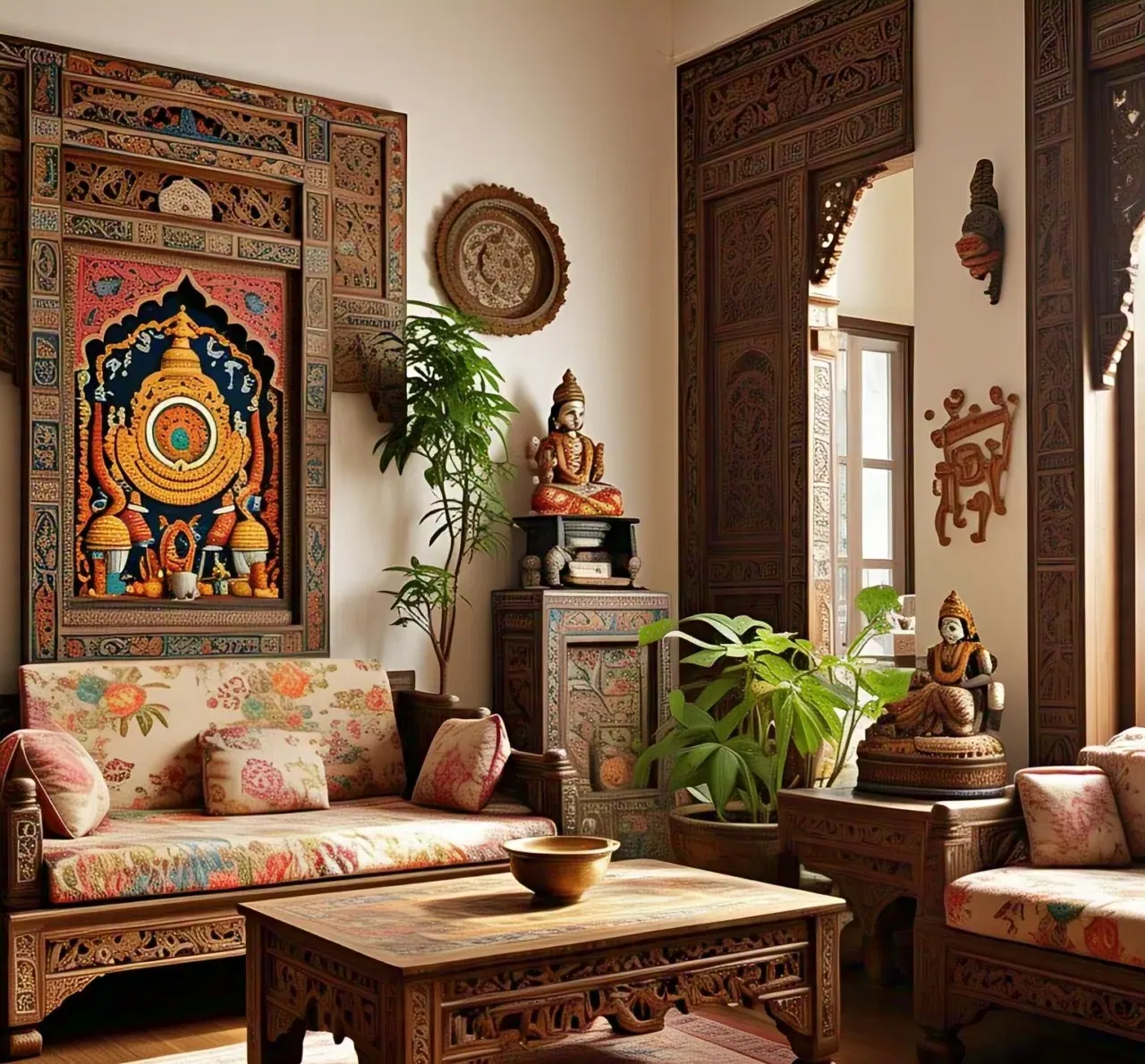
A Buddha statue is traditionally placed in the North-East or East of the home, at eye level or higher, in a clean and quiet spot. The ईशान्य (Ishanya, the North-East) is the zone Vastu links with prayer, clarity and stillness, so a meditating Buddha sits naturally there.
A living room shelf, a study corner or a meditation nook all work. Let the figure face into the room, with a plain wall behind it. A small lamp or a bowl of fresh flowers nearby adds to the sense of शांति (shanti, peace).
If your family worships the Buddha, follow the customs of your own tradition first. Vastu directions come second to that.
05
Where should a Buddha statue not be kept?
A Buddha statue should not be kept on the floor, in a bathroom, or anywhere feet point towards it. These are matters of respect more than of direction.
01
On the floor
Always raise the figure on a table, shelf or pedestal.
02
Bathrooms and toilets
Not inside, and preferably not on a wall shared with one.
03
Foot-end of the bed
Lying with your feet towards a sacred image is considered disrespectful across Indian traditions.
04
Near shoes or dustbins
Keep it away from the shoe rack and from under-stair storage.
05
As casual décor
Many Buddhists find Buddha heads, bar counter pieces and ground-level garden ornaments hurtful. Choose a complete figure and give it a proper place.
06
Buddha or Laughing Buddha: what is the difference at a glance?
The quick difference is that the Buddha is a sacred image and the Laughing Buddha is a symbol of cheer. This short comparison helps when you are choosing a gift or arranging a shelf.
01
Who he is
Buddha: Gautama Buddha, a religious teacher. Laughing Buddha: Budai, a monk of Chinese folklore.
02
Tradition
Buddha: Buddhist worship, and respected in Indian homes. Laughing Buddha: Chinese custom and Feng Shui.
03
Usual place
Buddha: North-East or East, in a quiet corner. Laughing Buddha: living room, facing the main door.
04
Mood
Buddha: stillness and reflection. Laughing Buddha: welcome and good humour.
07
When to consult a Vastu expert
Consult a Vastu expert when you are setting up a prayer or meditation corner and are unsure which part of the flat is truly the North-East. A compass reading settles that. The direction finder gives a quick first check, and our area-specific guidance covers each room.
Dr. Kimaya Parikh-Ambekar of VastuKimaya practises Vastu from her Andheri East office in Mumbai, with on-site and distant consultations. Feng Shui is a different tradition and is not part of her services, and she will tell you plainly which custom belongs where. You can book an appointment when you are ready.
Questions
Frequently asked
Which direction should the Laughing Buddha face?
The Laughing Buddha is commonly placed facing the main door, so that he greets whoever enters. This comes from Feng Shui, not from classical Vastu. In a flat where the door opens onto a wall, a table diagonally opposite the entrance in the living room works just as well.
Can I keep a Laughing Buddha in the bedroom?
Custom generally keeps the Laughing Buddha out of the bedroom and in shared spaces such as the living room, foyer or office. There is no classical Vastu rule on this, since the figure belongs to Chinese tradition. If you do keep one in a bedroom, place it on a raised shelf, not at the foot-end of the bed.
Should a Laughing Buddha only be received as a gift?
No, this is a popular belief and not a rule from Vastu or Feng Shui texts. Many people say a gifted Laughing Buddha brings more luck than one you buy. You may follow it if you enjoy the custom, but buying one for your own home is perfectly acceptable.
Can a Buddha statue be kept in the living room?
Yes, a Buddha statue can be kept in the living room, ideally in the North-East or East, at eye level or higher. Give it a clean shelf with a plain background, away from the television unit and the shoe rack, and make sure no seating has feet pointing directly at it.
Can I keep a Buddha statue in the garden or balcony?
A Buddha statue can be kept in a garden or balcony if it is raised on a pedestal and the area is kept clean. Avoid placing it on the ground among pots, near drying clothes or beside a drain. A sheltered North-East or East corner with plants around it is a respectful choice.
Want this applied to your own home or office?
Book free consultation