










Healing Therapies · 19 September 2026 · 5 min read
Yantras in Vastu: Meaning and Placement
What yantras are, how they are used in Vastu, and where to place common yantras such as Shri Yantra, Vastu Yantra and Kuber Yantra, with care and respect.
By Dr. Kimaya Parikh-Ambekar, Vastu consultant, Andheri East, Mumbai
01
What is a yantra in Vastu?
A yantra is a sacred geometric diagram used as a focus for spiritual energy, and in Vastu it serves as a subtle remedy to balance a space. The Sanskrit word यन्त्र (yantra, an instrument or tool) reflects that it is seen as a tool for concentrating and directing energy.
Yantras are built from precise shapes: a central point called the बिन्दु (bindu, the point of origin), triangles, circles, lotus petals and an outer square with gates. Each form is linked to a particular deity or energy. In Vastu, they sit alongside other remedies such as pyramids, crystals and colour.
02
How do yantras work as a Vastu remedy?
Yantras work as a Vastu remedy by acting as a focused point of positive energy in a zone that needs support. Traditional belief holds that the geometry, when energised with mantra and intention, radiates that energy into its surroundings.
Like other non-structural remedies, yantras are useful where a structural change is not possible, such as a cut corner, a toilet in a sensitive zone or an entrance in a difficult pada. They are portable, which suits flats and rented premises.
It helps to see a yantra as a focus for intention and respect rather than a magical object. Families who keep a yantra usually clean its space, light a lamp and pause there, and that regular attention itself brings a calmer, more mindful quality to the zone.
03
Where should a Shri Yantra be placed?
A Shri Yantra is ideally placed in the North-East or in the pooja room, facing East or West so that it can be seen when you pray. It is associated with Goddess Lakshmi and with abundance, harmony and spiritual growth.
Keep it on a clean altar or wall at eye level. Many families offer a flower or light a diya before it daily. In an office, a Shri Yantra may be placed in the North or North-East of the owner's cabin, kept dust-free and respected.
04
What are other common Vastu yantras and their placement?
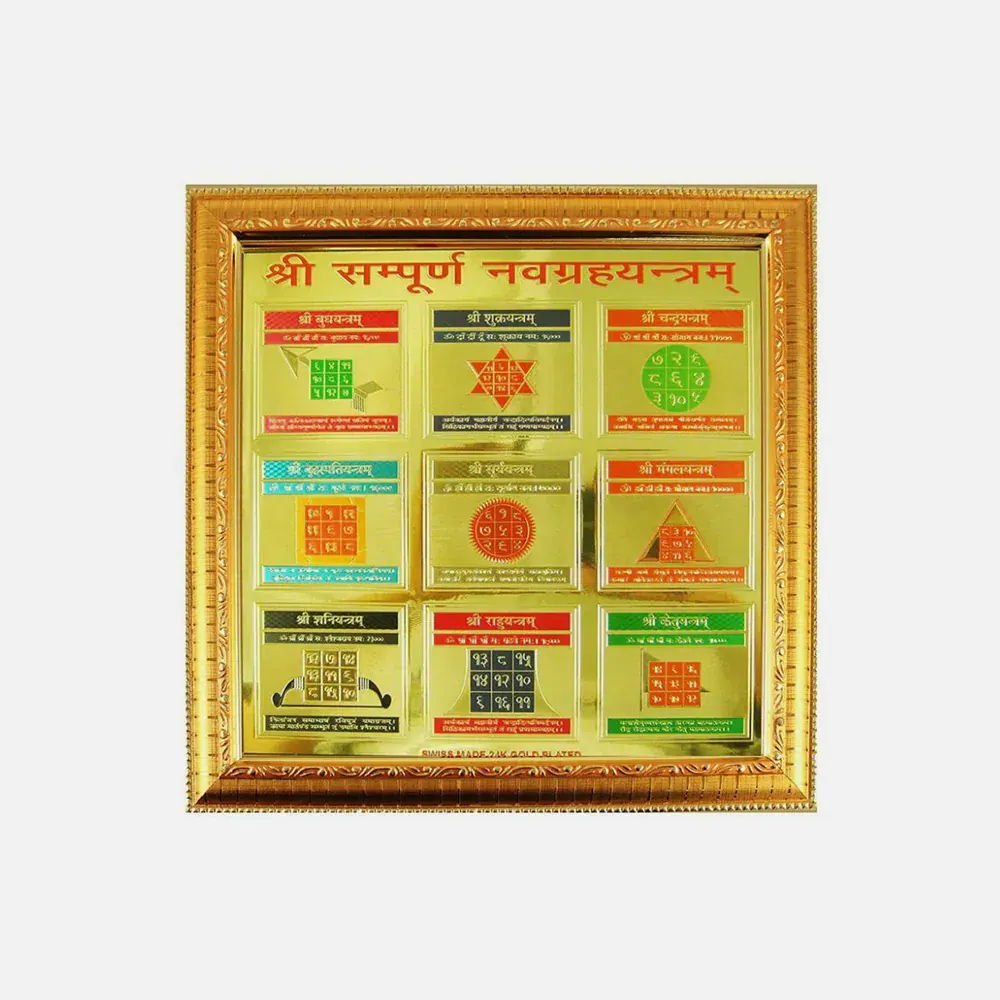
Other common Vastu yantras include the Vastu Yantra, Kuber Yantra and Navagraha Yantra, each placed according to the energy it represents.
01
Vastu Yantra
Used to balance general Vastu defects; often placed near the main entrance, in the pooja room, or in the zone where the defect lies, as advised.
02
Kuber Yantra
Linked with Kubera, the guardian of wealth; placed in the North or near the cash locker, facing the direction of use.
03
Navagraha Yantra
Represents the nine planetary deities in traditional worship; usually kept in the pooja area in the North-East.
04
Vastu Purusha Yantra
Representing the वास्तु पुरुष मंडल (Vastu Purusha Mandala); sometimes used during housewarming or in foundations, as guided.
05
What material should a yantra be made of?
Yantras are traditionally made of copper, brass, silver or gold-plated metal, and are also printed or engraved on crystal or bhojpatra. Copper is widely used because it is considered a good conductor of subtle energy and is affordable.
Whatever the material, the lines should be precise and clearly engraved. A scratched, bent or faded yantra is traditionally replaced rather than repaired. Avoid buying yantras purely on attractive packaging or large promises; the right choice depends on your space and need.
06
How is a yantra energised before placement?
A yantra is energised before placement through cleansing and a simple ritual of prayer, mantra and intention, a process often called प्राण प्रतिष्ठा (prana pratishtha, infusing life energy). It is usually done on an auspicious day or time.
At home, clean the yantra with a soft cloth, place it on a fresh cloth, light a diya, offer a flower and sit quietly with a clear intention. Where a yantra is part of a Vastu remedy plan, it should be energised as guided by your consultant.
07
What should you avoid when placing a yantra?
Avoid placing a yantra in a toilet, bathroom, on the floor, under a bed or anywhere it will get dirty or be disrespected. Yantras are treated as sacred objects.
01
Too many yantras
Placing many yantras at random can confuse rather than balance a space.
02
Wrong zone
A wealth yantra in a cluttered South-West store or a spiritual yantra in the kitchen is not advised.
03
Neglect
Dust, cobwebs and broken frames reduce the sense of care; clean yantras regularly.
04
Fear-based buying
A yantra is a supportive remedy, not protection from misfortune; choose calmly, not out of worry.
08
When to consult a Vastu expert
Consult a Vastu expert before buying or placing yantras for a specific problem, so that the right remedy is chosen for the right zone. A compass study shows where a defect actually lies.
Dr. Kimaya Parikh-Ambekar suggests non-structural remedies, including activated pyramids, crystals and other tools where suitable, from VastuKimaya's office in Andheri East, on-site across Mumbai and through distant consultation using floor plans and photographs.
Questions
Frequently asked
Where should a Vastu yantra be placed at home?
A Vastu Yantra is commonly placed near the main entrance, in the pooja room or in the zone where a defect exists, as advised after a Vastu study.
Can a Shri Yantra be kept in the bedroom?
A Shri Yantra is traditionally kept in the pooja room or North-East rather than the bedroom. If you must keep one in a bedroom, place it respectfully on a clean shelf, not near the bed.
Which direction should a Kuber Yantra face?
A Kuber Yantra is placed in the North or near the cash locker, associated with Kubera, the guardian of wealth.
Do yantras need to be energised?
Yes. Yantras are traditionally energised with cleansing, prayer, mantra and intention before they are placed.
Can a yantra replace structural Vastu correction?
A yantra is a supportive non-structural remedy. It is often used where structural changes are not possible, as part of a wider remedy plan.
Want this applied to your own home or office?
Book free consultation