







Gen Z & Kids · 19 September 2026 · 5 min read
Reiki for Teens: Calm, Focus and Emotional Balance
Exams, friendships, social media and big feelings — the teenage years can be intense. How Reiki can offer teenagers a gentle space to relax, what a session involves, and how it sits alongside other support.
By Dr. Kimaya Parikh-Ambekar, Vastu consultant, Andheri East, Mumbai

01
What is Reiki and how can it help teenagers?
Reiki is a gentle Japanese healing practice in which a practitioner channels universal life energy through light touch or hands held just above the body, and many teenagers find it deeply relaxing. The word is often explained as 'universal life energy', close to the Indian idea of प्राण (prana, life energy).
The teenage years bring exams, entrance preparation, changing friendships, social media pressure and strong emotions, often all at once. A Reiki session offers a quiet, screen-free pause in which a teen can simply rest.
Reiki is complementary. It does not diagnose or treat any condition, and it works alongside, never in place of, doctors, counsellors, teachers and family support.
02
What might teens experience after Reiki?
Teens often describe feeling calmer, lighter and more settled after a Reiki session. Experiences vary from person to person and from session to session, and there is no 'right' way to feel.
01
Relaxation
A sense of physical ease and slower breathing during and after the session.
02
Mental clarity
Some teens say it becomes easier to settle down to study afterwards.
03
Emotional space
A safe, non-judgemental time that can make feelings easier to notice and talk about.
04
Better wind-down
Some find it easier to relax in the evening, which can support a healthier sleep routine.
03
What happens in a Reiki session for a teenager?
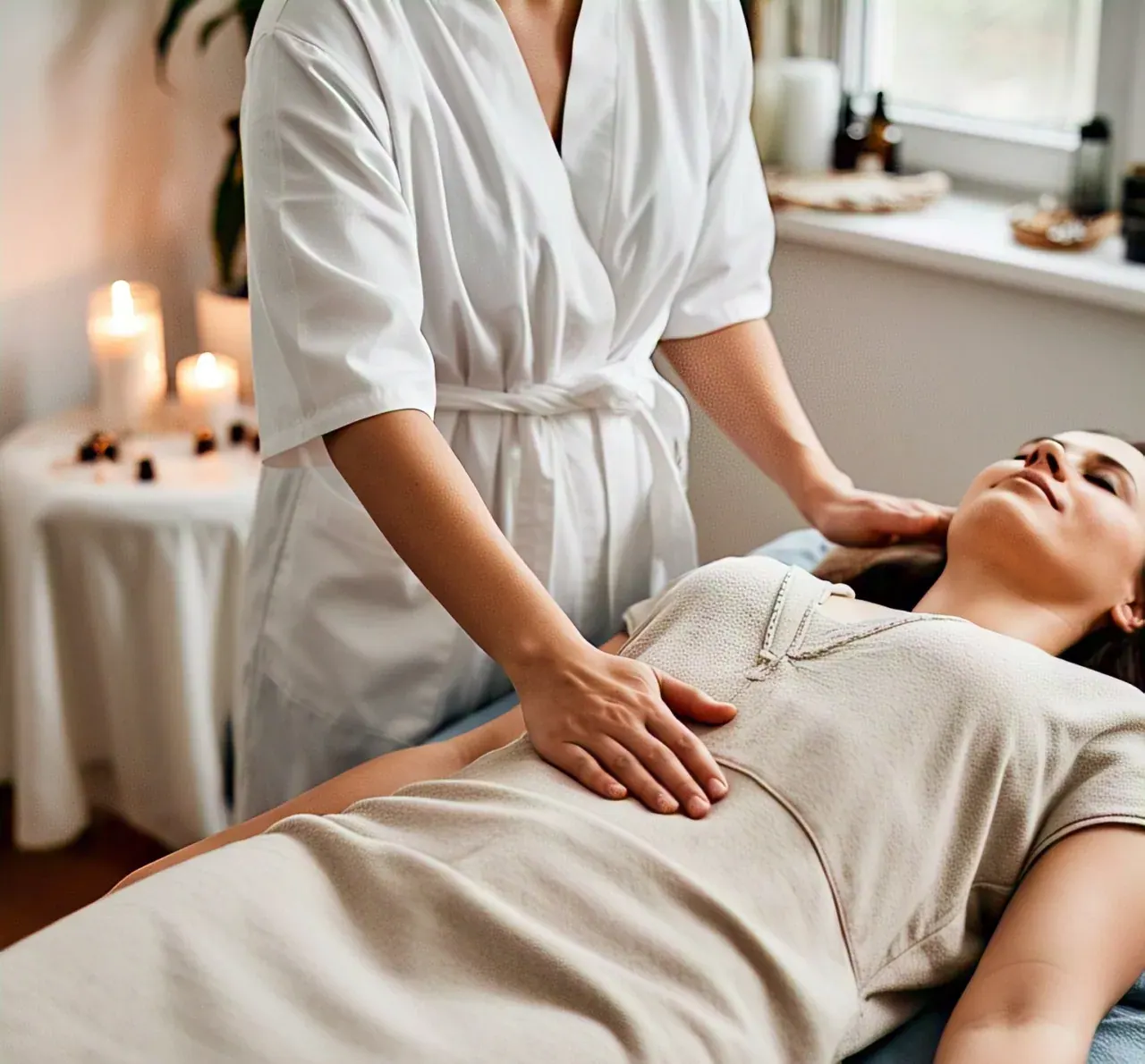
In a Reiki session, the teenager lies down or sits comfortably, fully clothed, while the practitioner places hands lightly on or near areas such as the head, shoulders and hands. There is no massage, manipulation or medicine involved.
Sessions begin with a short, friendly conversation about how the teen is feeling and what they would like from the session. The room is kept quiet and softly lit. Afterwards there is time to sit up slowly, drink water and share anything they wish to.
01
Consent first
The teen should want the session, and a parent or guardian gives consent for minors.
02
Comfort always
Teens can ask for hands-off Reiki, a parent in the room, or a pause at any time.
03
No pressure
They are not expected to talk, believe anything or feel something specific.
04
Can Reiki help with exam stress and focus?
Reiki can be a supportive part of an exam-season routine, offering relaxation that many students find helps them return to study with a clearer head. It works in harmony with good sleep, food, movement and a realistic study plan, not as a shortcut.
Simple Vastu steps at the study desk can complement this: facing East or North while studying, keeping the desk uncluttered, and sitting with a solid wall behind rather than a door.
05
What calming practices can teens try at home?
Teens can try short, simple calming practices at home between sessions. These take only a few minutes and can become a steady daily habit.
01
Three slow breaths
Before opening books or after closing the phone, breathe in for four counts and out for six.
02
Hands on heart
Rest both hands on the chest for a minute and notice the breath; a gentle self-care moment inspired by Reiki.
03
Screen-free wind-down
Put the phone outside the bedroom for the last half hour before sleep.
04
Morning light
Spend a few minutes near an East-facing window or balcony in the morning.
05
A calm corner
Keep a small, tidy corner of the room for reading, journaling or simply sitting quietly.
06
What should parents keep in mind?
Parents should keep Reiki optional, gentle and part of a wider circle of support. Teenagers respond well when they feel respected rather than 'fixed'.
01
Ask, don't insist
Offer Reiki as an option and let your teen decide.
02
Stay involved
Meet the practitioner and ask any questions before the first session.
03
Never stop treatment
Reiki must never replace medication, therapy or medical advice your teen already receives.
04
Watch for warning signs
Long-lasting withdrawal, changes in sleep or eating, falling marks or talk of self-harm need professional attention.
07
When should a teenager get professional help?
A teenager should get professional help when stress, sadness, anxiety or anger lasts for weeks, affects daily life, or includes thoughts of self-harm. A doctor, school counsellor, psychologist or psychiatrist can offer proper assessment and care.
If you are struggling, please reach out to a mental-health professional. In India you can call the free Tele-MANAS helpline on 14416 (or 1-800-891-4416), available 24×7.
08
When to book a Reiki session
Book a Reiki session when your teenager is interested in a gentle way to relax, during a demanding academic period, or after a change such as moving home or school. Starting with a single session helps them see how it feels.
Dr. Kimaya Parikh-Ambekar of VastuKimaya offers Reiki healing at her Andheri East office in Mumbai, and can combine it with study-room Vastu guidance on-site across Mumbai or through distant consultation.
Questions
Frequently asked
Is Reiki safe for teenagers?
Reiki is a gentle, non-invasive practice that is generally considered suitable for teenagers. For minors, a parent or guardian should give consent, and it should complement any medical or psychological care.
Can Reiki help students concentrate?
Many students find Reiki relaxing, and some say it helps them settle down to study. It works alongside good sleep, a clear study plan and a calm study space, not as a substitute for them.
At what age can a child receive Reiki?
Children of any age can receive gentle Reiki with parental consent, and sessions for younger children are usually shorter. Teenagers can take a more active part in choosing whether they want it.
Can teenagers learn Reiki themselves?
Some teenagers learn simple Reiki self-practice with a parent's agreement. Discuss suitability and readiness with the practitioner before enrolling.
Does Reiki replace counselling for anxiety?
No, Reiki does not replace counselling or medical care for anxiety. It can be a calming complement, and a teen experiencing ongoing anxiety should speak with a qualified mental-health professional.
Want this applied to your own home or office?
Book free consultation