





Residential Vastu · 27 September 2026 · 7 min read
Moving Abroad: Settling into a New Home with Vastu
The first weeks in a new country are spent on paperwork and boxes. A little attention to how the home is set up, in the right order, makes the settling in easier.
By Dr. Kimaya Parikh-Ambekar, Vastu consultant, Andheri East, Mumbai
Read this in: हिन्दी
01
What matters in the first week?
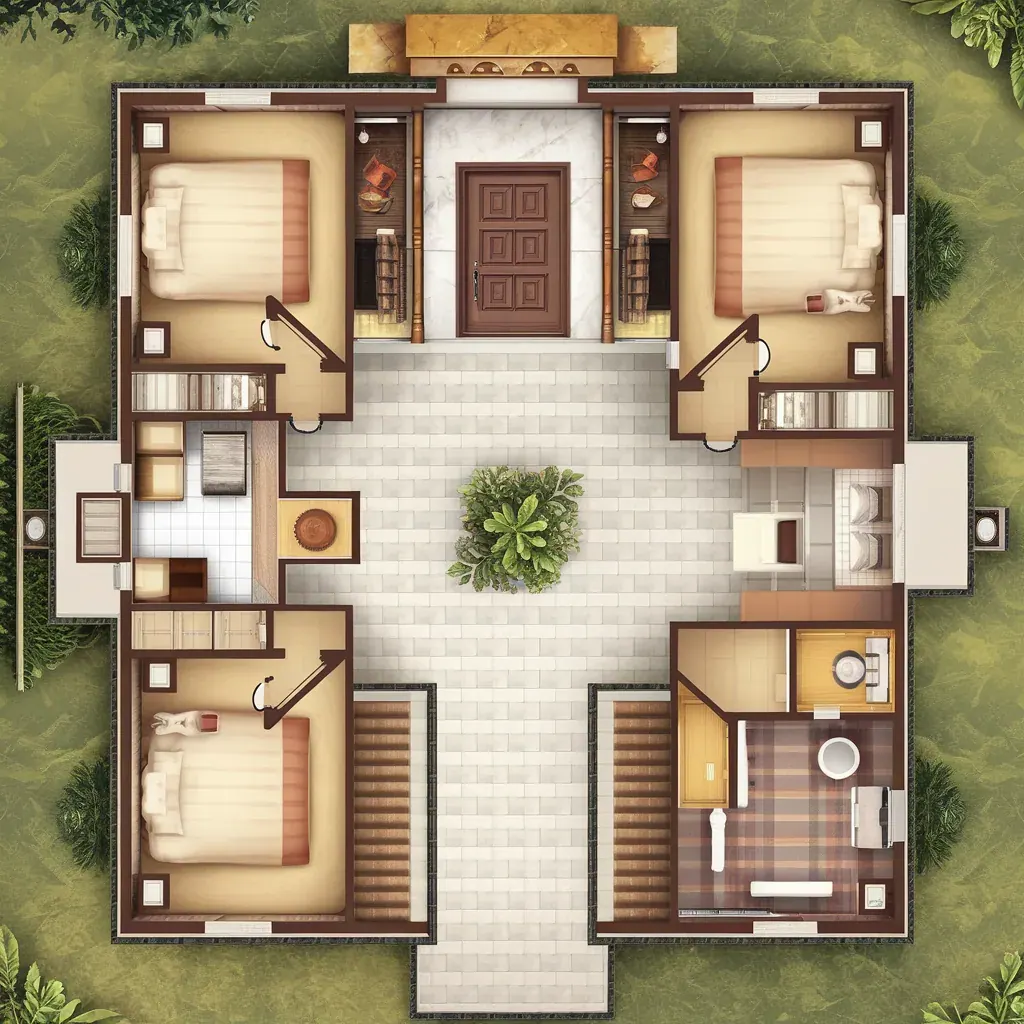
Sleep, first. Before the pictures go up and the sofa finds its place, decide which room each person sleeps in and which way the beds face. Head towards South or East, and the main bedroom in the South-West where the layout allows.
The reason is practical rather than mystical. A move disrupts everything at once — time zone, diet, noise, light, language — and sleep is the thing that repairs all of it. Getting the bedrooms right in week one pays for itself immediately.
Everything else can wait. Boxes in the hall for a fortnight are normal. What should not wait is a bed placed badly because nobody thought about it on the first night.
02
How do you set up the rooms?
In order of what affects daily life most. Work through the list over the first fortnight rather than trying to do it all in a weekend.
01
Bedrooms
Head towards South or East. Main bedroom in the South-West if there is a choice. Keep heavy storage in the South and West, not in the North-East.
02
Kitchen
South-East is ideal, North-West acceptable. Where the hob is fixed, face East while cooking and keep the sink and the hob from sitting directly adjacent.
03
Children's room and study
West or North-West suits a children's room, with the study desk facing East or North. Settling into a new school is easier from a desk that gets daylight.
04
The mandir
North-East. In a small flat a shelf is enough — what matters is that it is clean, at a sensible height, and not inside a bedroom wall shared with a toilet.
05
The entrance
Keep it lit, clear and clean. No pile of shoes, no recycling bins, no unopened boxes accumulating in the lobby for three months.
06
The centre
Keep the ब्रह्मस्थान (Brahmasthan, the centre) of the home open and light. It is the easiest thing to lose to storage in a small flat, and the easiest to fix.
03
What can you do before you even choose the property?
Have the plan looked at before signing. Rents and deposits abroad are large, leases are often long, and it is far cheaper to compare two shortlisted flats on paper than to move twice.
Send the floor plan, a compass reading if you can get into the property, and photographs from the listing. Even a partial analysis can tell you where the entrance sits, whether the kitchen and toilets fall awkwardly, and which of two options has the more workable layout.
This is a routine part of remote consultations — a distant analysis from a plan and photographs, wherever the property is.
04
What about the house you left behind?
It is worth thinking about, because many people move abroad and leave a flat in India locked, let or occupied by parents, and it stays on their mind for years.
A closed flat should not be left with water standing, rubbish in it, or the mandir untended. Ask whoever holds the keys to open the windows periodically, keep the entrance clear, and let light in. A home that is sealed for months develops damp and smell, and both are real problems rather than energetic ones.
If elderly parents are living there, their comfort takes priority over any layout rule. Reachable storage, good lighting, a bathroom without steps and a room they actually like matter more than a direction.
05
Are there simple rituals for a new home in another country?
Yes, and they can be scaled to what your building and your neighbours allow. The point of a गृह प्रवेश (Griha Pravesh, house-entering ceremony) is to mark a threshold deliberately rather than to drift into a house between deliveries.
A simple version works anywhere: clean the empty home thoroughly, enter with the family together, light a diya briefly at the entrance and in the North-East, place the mandir before anything else, boil milk or cook something simple on the first day, and say a short prayer of your own tradition. ॐ शान्तिः शान्तिः शान्तिः (Om shanti shanti shanti, peace, peace, peace) is enough if nothing else comes to mind.
Be sensible about fire. In sealed, carpeted flats with smoke alarms, keep flame small and brief with a window open, or use a lamp. Where building rules forbid flame entirely, an electric diya carries the intention perfectly well.
06
What helps the home feel like yours?
Time, mostly. But a few things speed it up noticeably, and none of them requires the landlord's permission.
Light the dark corners — in northern countries this is the single most useful change you can make, and warm lamps in the corners of a living room transform how a flat feels in winter. Bring sound in: a mantra in the morning, music you grew up with, a bell. Keep one surface in each room entirely clear. Add plants where the light allows, and put up two or three things from home rather than filling the walls.
Colour is the other easy lever. Where you cannot paint, use cushions, curtains and rugs — a warmer palette in the South and West, lighter tones in the North and East. Crystal therapy suggestions are simple to follow abroad too, since stones can be sourced locally.
07
What if settling in is genuinely hard?
Then treat that seriously rather than hoping a rearranged bedroom will carry it. The first year in a new country is disorienting for most people, and the isolation is often worse than anyone admits to their family back home.
Look for the ordinary supports first — daylight in the morning, a routine, one or two people you see regularly, movement, and contact home that is not only reassurance. If low mood, anxiety or sleeplessness persists, speak to a doctor or a therapist where you live; many employers and universities offer counselling at no cost.
If you are in real distress, contact emergency services in your country. If you are in India, the free Tele-MANAS helpline is available 24×7 on 14416 (or 1-800-891-4416). Reiki and Vastu work may support rest and calm; they complement professional care and never replace it.
08
When to consult a Vastu expert about a new home abroad
Two moments are worth it: before signing, when a comparison between shortlisted properties can save you a year of discomfort, and a month or two after moving in, when you know which rooms nobody uses and where everyone actually gathers.
Dr. Kimaya Parikh-Ambekar consults from VastuKimaya, A-1304, Naman Premier, Marol Military Road, Andheri East, Mumbai 400059 — in person across Mumbai and Thane, other Indian cities on request, and remotely anywhere from a floor plan and photographs. Remedies are non-structural, so they suit rented homes and leases you may not renew.
Write to stayblessed@vastukimaya.com or message +91 70391 07512 with your city and time zone. The first consultation call is free, and sessions are held in English, Hindi, Marathi or Gujarati.
Questions
Frequently asked
What should I set up first when moving into a home abroad?
The bedrooms. Decide who sleeps where and place the beds with the head towards South or East before anything else, because sleep repairs most of what a move disrupts.
Can I have a property checked before I sign the lease?
Yes, and it is worth doing. A floor plan, listing photographs and a compass reading if you can visit are usually enough to compare two shortlisted properties.
How do I do a Griha Pravesh in a flat with smoke alarms?
Scale it down. Clean the home, enter together, keep any flame small and brief with a window open or use an electric lamp, place the mandir first, and cook something simple.
What should I do about the flat I left in India?
Keep it aired, clean and free of standing water, with the entrance clear and the mandir tended. Ask whoever holds the keys to open windows and let light in periodically.
Will I need a new consultation if I move again?
Yes. Direction and layout are specific to a building, so the analysis is redone rather than carried over. Most portable remedies, though, can travel with you.
Is it normal to feel unsettled for months after moving?
Very. Give it time and ordinary support — daylight, routine, company. If low mood or sleeplessness persists, speak to a doctor or therapist where you live.
Want this applied to your own home or office?
Book free consultation